I write as the latest “Storm of the Century” subsides in the US. For the past weekend my social media feed has been completely whitened with pictures of snowdrifts all across the country, as my friends and relatives watch the blizzard pass from warm homes under cozy blankets. Texas freaked out as usual, but them’s the breaks with an independent power grid.
It occurs to me that now might be the time to reflect on my winter in Kyiv during the energy crisis.
To catch up, Ukraine has been hit with waves of Russian attacks designed to knock out the energy grid and deprive civilians of utilities during its coldest winter since 2013. As temperatures in Kyiv dropped to below 0° Fahrenheit, drones, missiles, and cyberattacks deprived us of heat, water, and electricity. Zelenskyy has declared a state of emergency in Ukraine’s energy sector, and even Kyiv’s mayor Vitali Klitschko has urged his constituents to temporarily leave the city if they are able.*
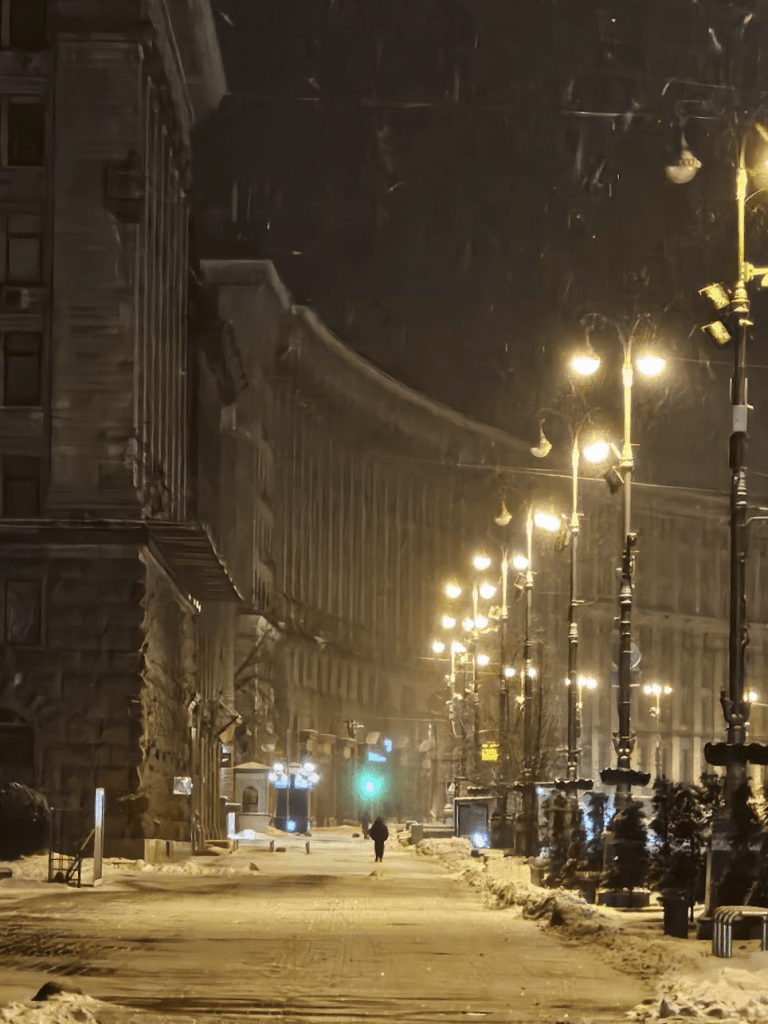
Most can’t, obviously, and so life continues in a damn grim fashion. Without heat, the temperature in my own apartment drops to about 40 degrees and I have trouble leaving my bed under the strata of 3 duvets and 3 blankets. Reading and even typing gets difficult, to explain my long absence from these missives. Fingers are cold, you see. Poor guy from Brooklyn’s a-cold. A space heater will eat up a fully charged auxiliary battery in about an hour and a half, whereas that will normally power lights, devices, and a kettle for a dark evening; as such, most of us simply will not get any sense of warmth from our homes.
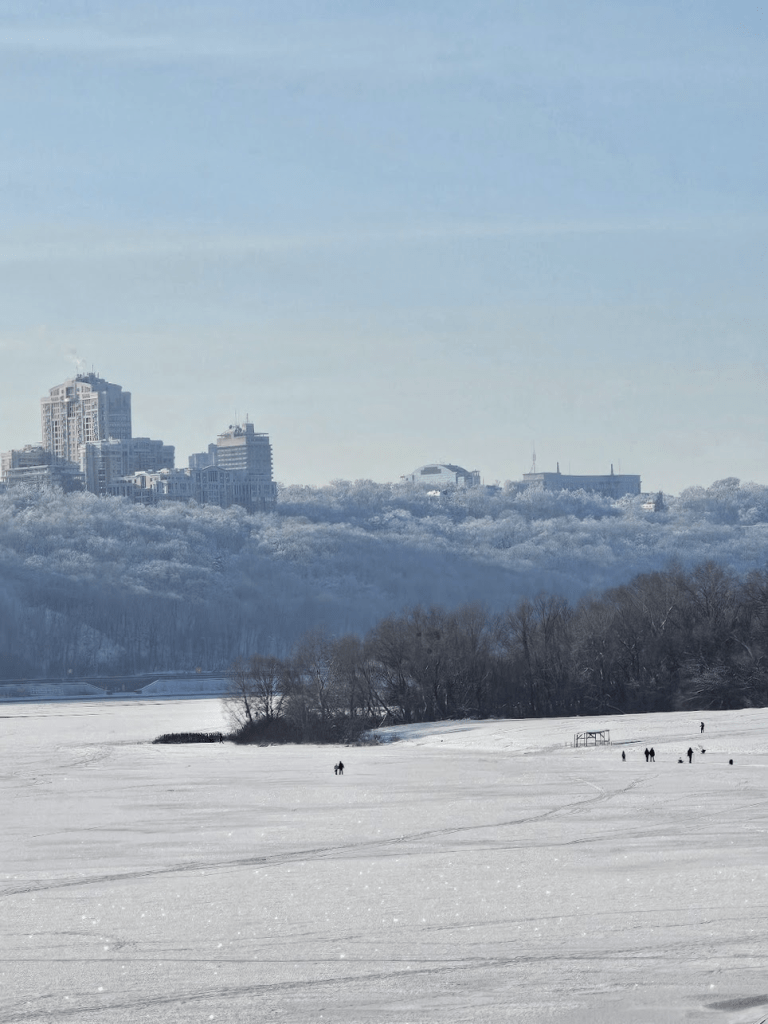
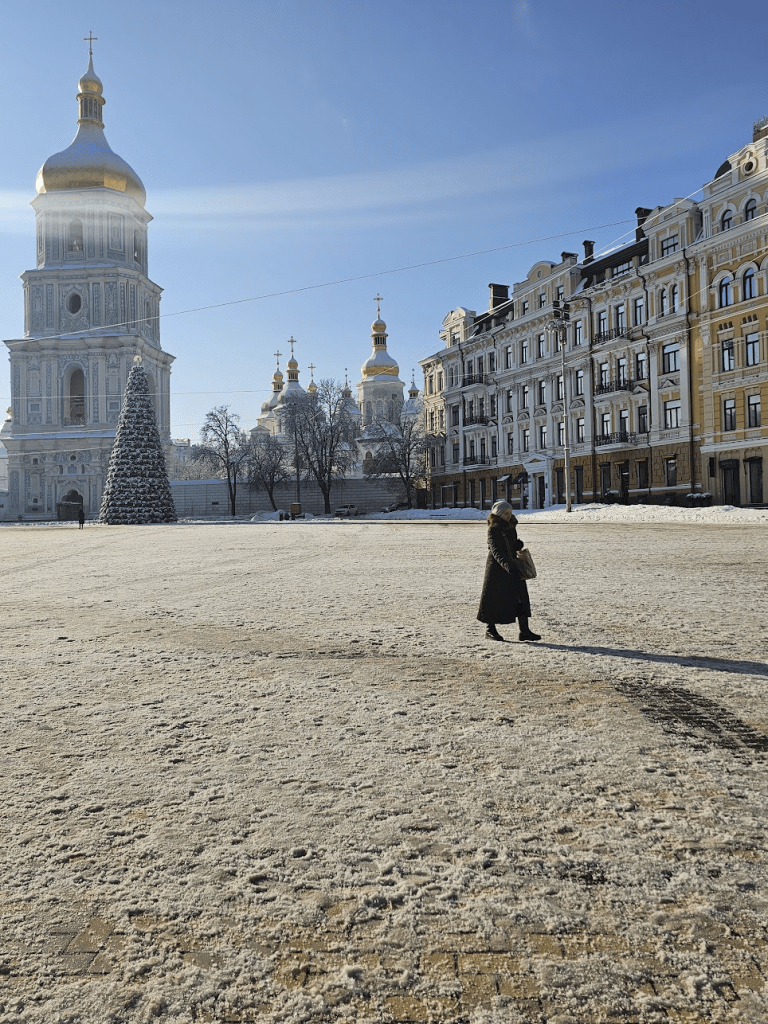
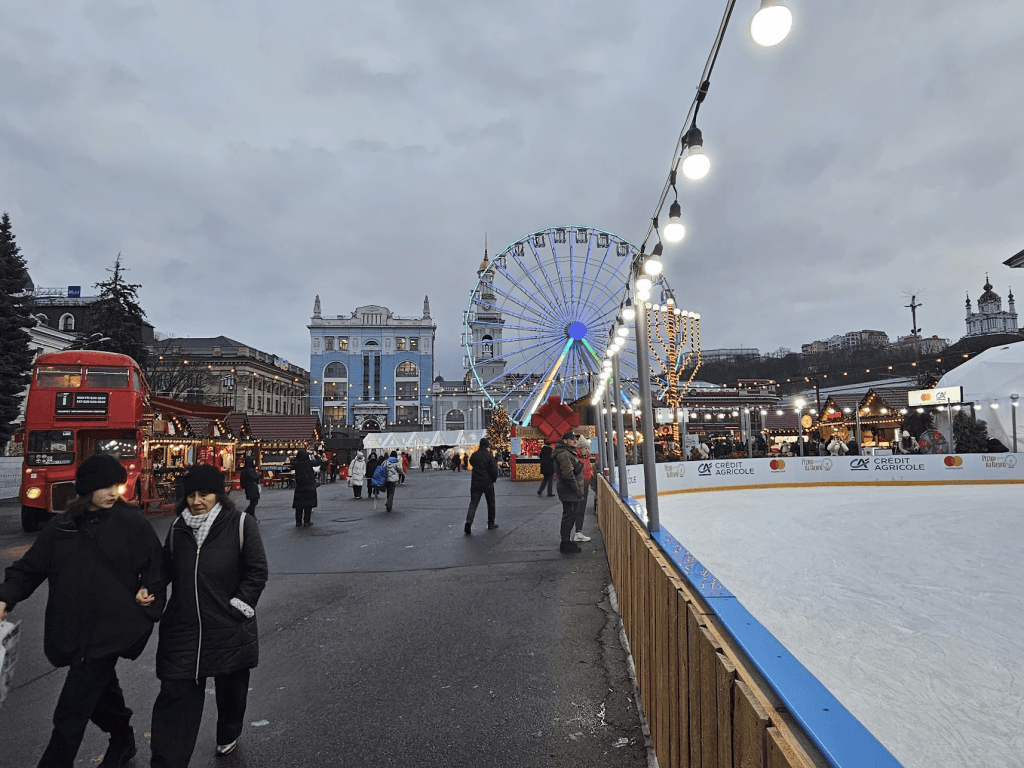
There are those who will rightfully point out that I chose to be here and shouldn’t complain, but the realities of life in these times need to be communicated. Ukrainians as ever put up a brave face. The holiday market in Podil glitters and buzzes and the cacophonous chorus of Christmas music continues into January to account for the Orthodox celebration. Much attention is given to Mykola Leontovych’s “Carol of the Bells” for its Ukrainian origin, not to mention its solemn melody.** Ice skaters dance on ponds, rinks, and iced over streets and one can watch children playing with their families on the completely frozen Dnieper.
There is still no hiding the draining and disheartening nature of this winter; there is simply no getting used to this. These attacks on civilian infrastructure are quite clearly and irrefutably war crimes, yet the international community has taken no action but to offer vague condemnation. Europe deepens its crisis of weakness and irrelevance, and Americans are rightfully focused these days on the horrific murders of two innocent civilians in Minnesota as the President tests just how much he can abuse the plebeians with impunity. As the United States is forced to reckon with a breach of the public trust, perhaps those back home can spare a thought for the thousands upon thousands of people who give their lives in Ukraine and Iran in defiance of murderous authoritarianism.
To be clear, there can be no surrender. We have seen what happens to Ukrainians forced to live in Russian occupation, and their experience alone gives everyone a reason to keep fighting. The Russian army, demoralized and disorganized, takes its frustrations out on civilian populations with alarming regularity. As drone warfare stretches the front line wider and wider, evacuations get more and more dangerous. Relief workers are forced to watch as drones kill helpless civilians, and the reports of torture and abuse of tens of thousands of abducted Ukrainian children are inalienable from the continued cause for resistance. The Trump administration’s entertainment of bad-faith “peace” proposals from the aggressor in this conflict do nothing to help morale and only serve as caustic reminders of the absolute omnishambles furthered by our government.
It’s a lot, and it can be overwhelming. It is still absolutely imperative to keep track. If you want to help but you’re not sure how to, feel free to reach out.
*It’s worth bearing in mind that Klitschko used to exchange cranial trauma for a living.
**The effect is totally drained after about the 7th Instagram story on the same day featuring a choir performance at a strike site, followed by maybe 15 renditions heard on a single walk outside. At least it’s a break from Mariah Carey.
It was an eight hour overnight train ride with two additional hours of delays in a 6×6 foot cabin containing me and three girls who collectively would not Shut the Fuck Up all night. In moments when I did manage to doze off, it was to the sound of conspiring whispers that would not have been misplaced in a Macbeth production. One said she was a former dancer for the Cleveland Cavaliers; her phone chimed all night despite denials that it was hers.
Anyway.
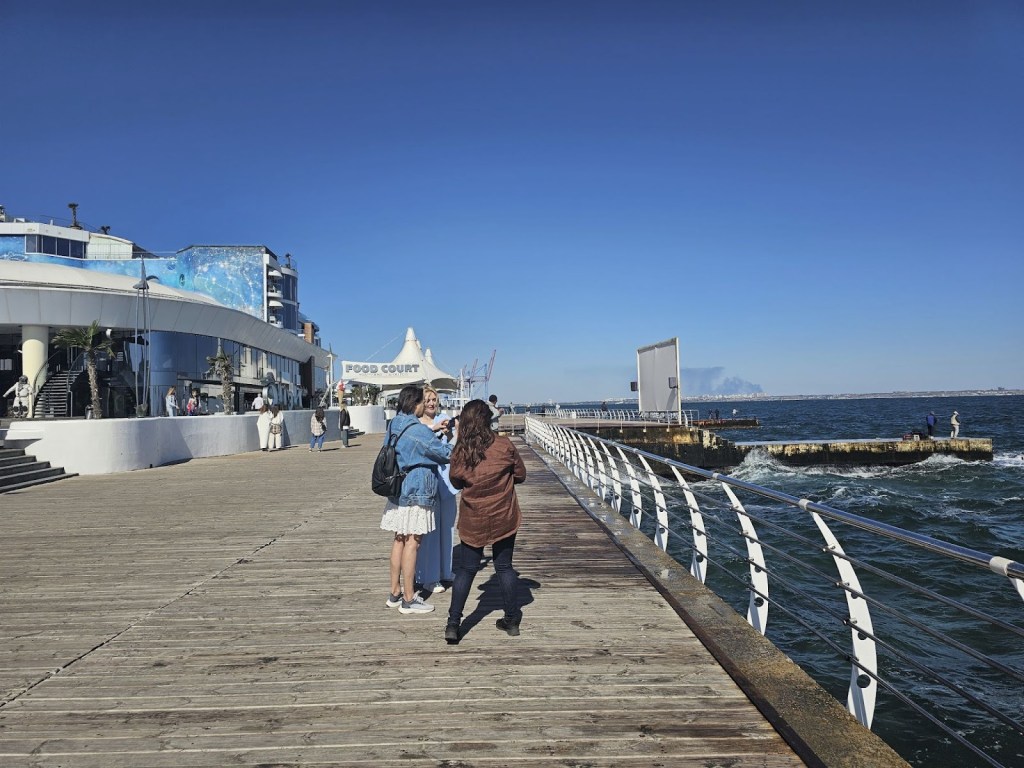
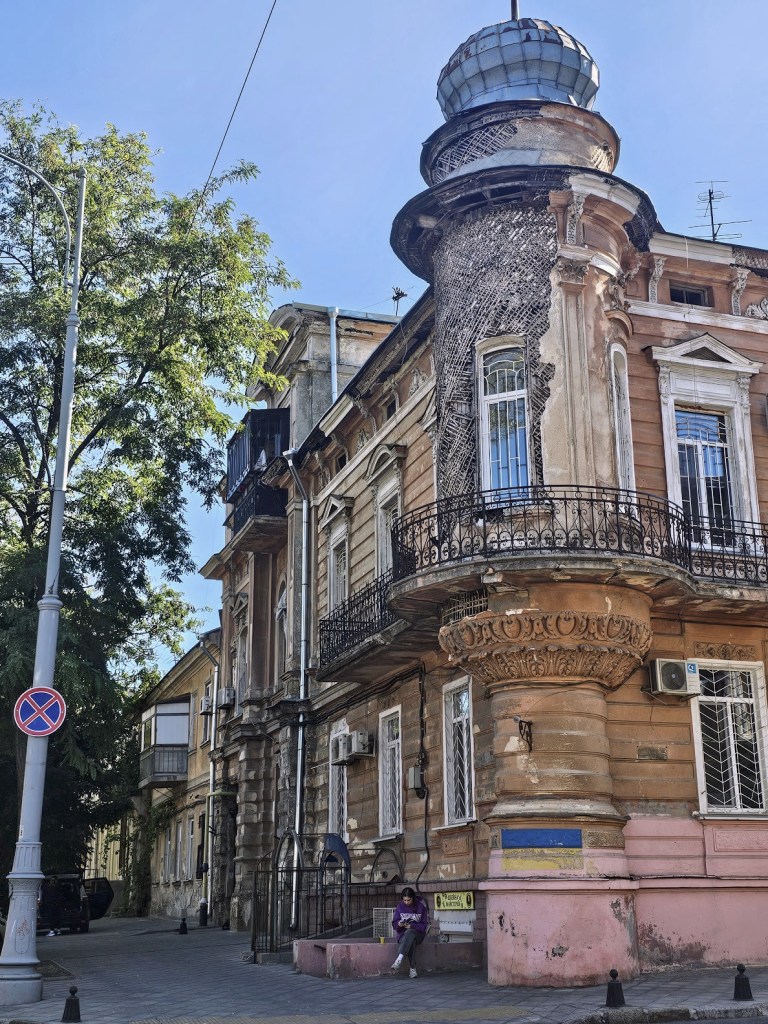
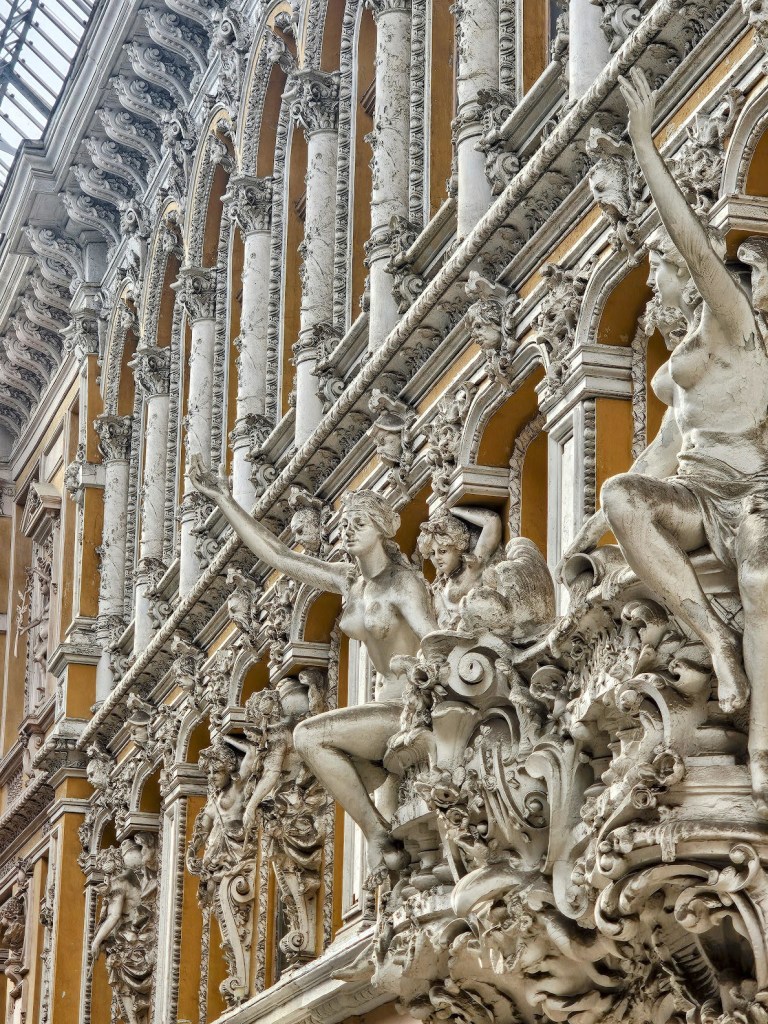
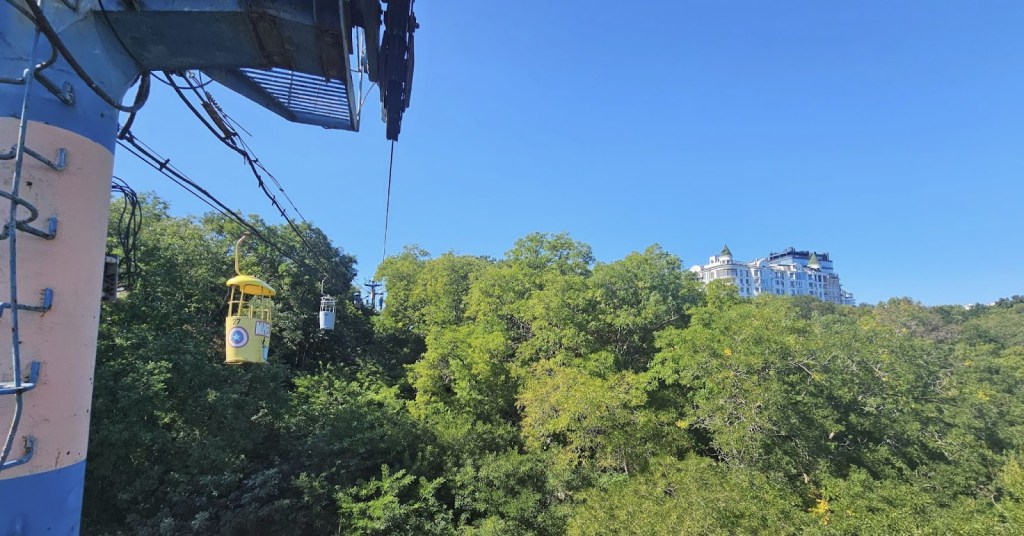
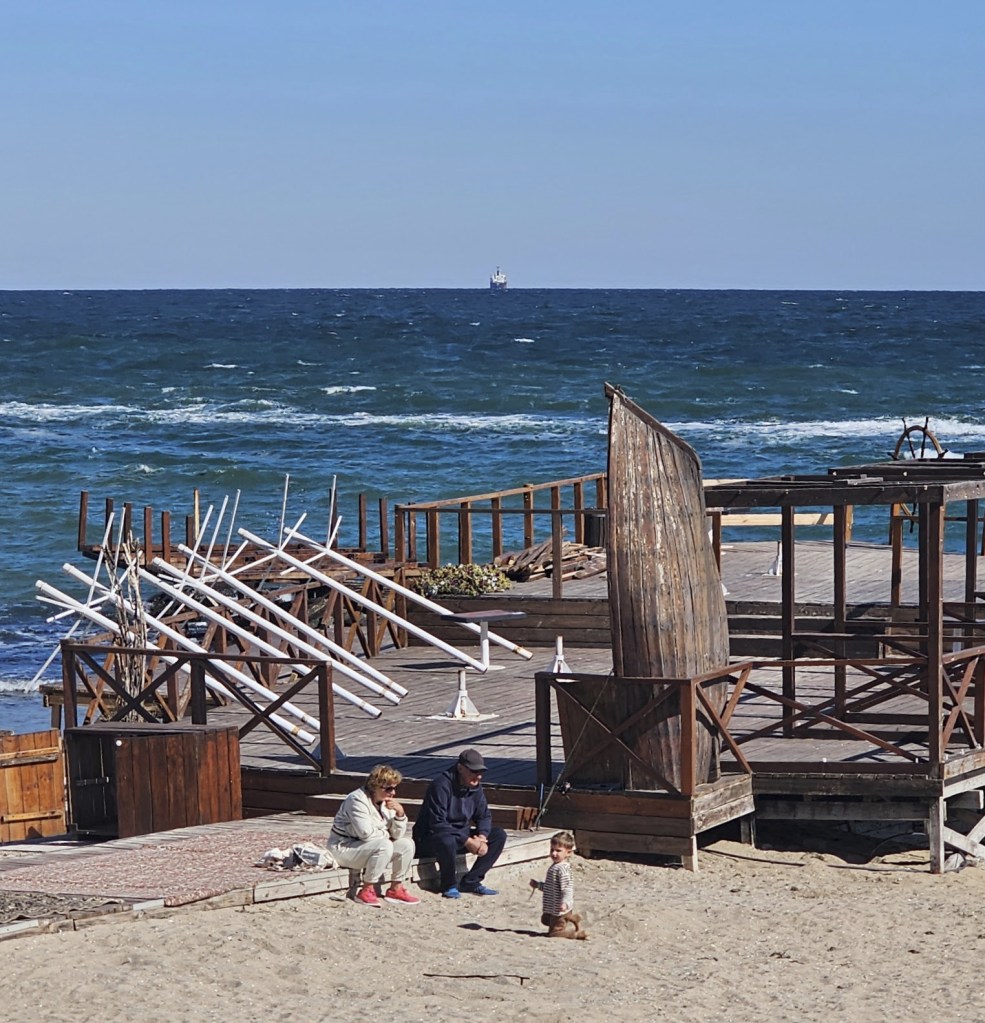
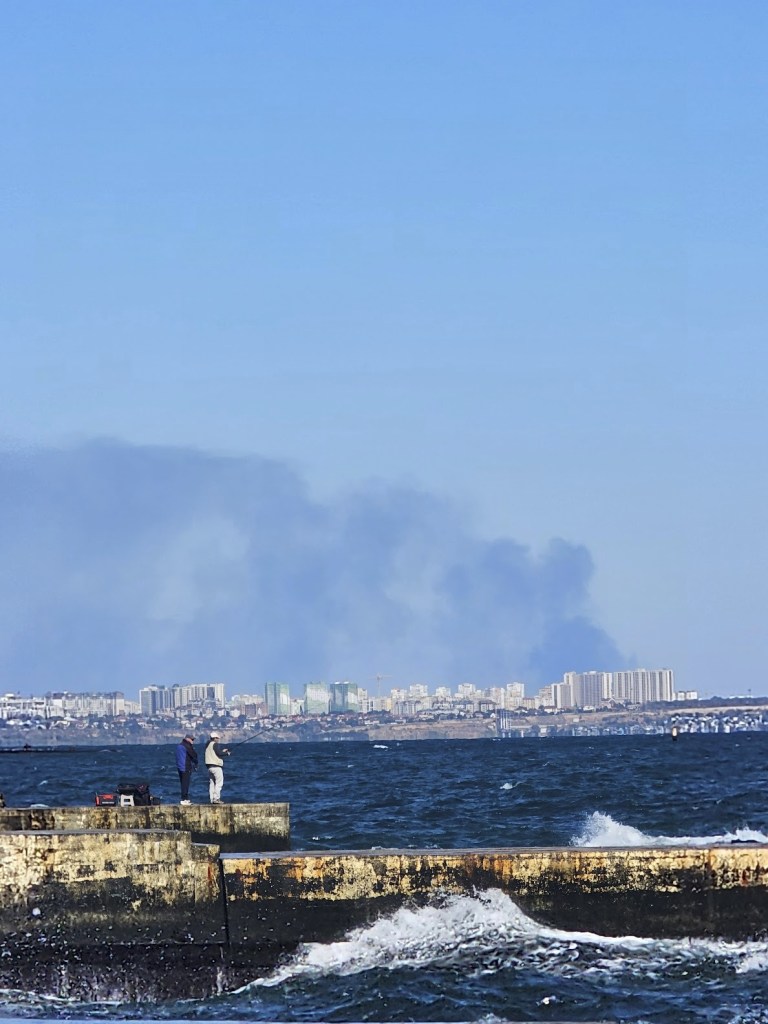
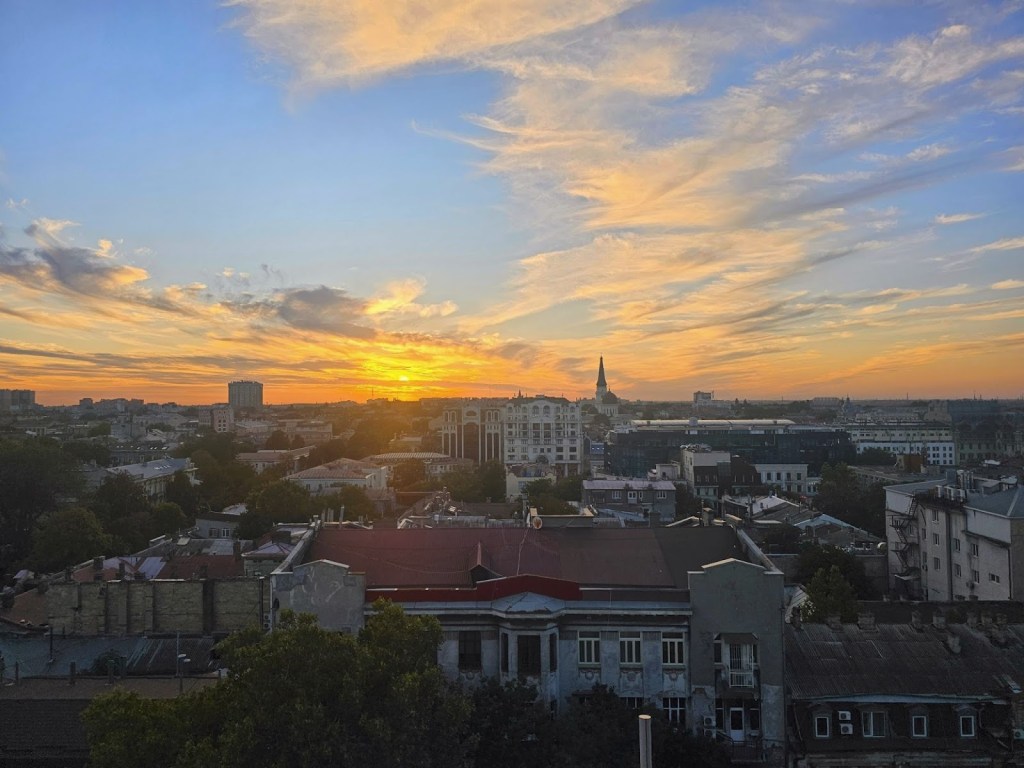
I finally arrived in the so-called Pearl of the Black Sea, a city of wide, tree-lined streets between sculpture-adorned facades. This imposing plateau looking out over the water is a vacation spot for Ukrainians, even more so now that travel out of the country is restricted for most men. The cool early-autumn breeze rustles the beaches, where a few swimmers get their last contact with salt water before the temperature plunges; every bar terrace in the historic city center is completely filled from about 7pm.
I get why Brighton Beach felt like home
It’s actually kinda trashy.
Recorded DJ tracks played at unreasonable volumes clash as you walk between bars, and strip clubs prominently feature on the main streets. Whereas in Kyiv any mention of sex work – or even illicit activity generally – prompts the same look as the word “fuck” dropped in polite company,* Odesa displays no such conservatism in its historic center. Jaywalkers casually traverse the road in a manner more befitting home than anything I’ve grown used to in Ukraine. The boisterous behavior of revelers under the eaves of 19th century houses reminds me of what I have seen of people on Bourbon Street or in Split.**
Odesa was first settled around the 6th century BCE by Greeks trading in the Black Sea. Over the next two millennia the city enjoyed a sense of security as it was exchanged between various medieval powers, before the Ottoman Empire assumed control on its path to Vienna and its greatest imperial height in 1529. Odesa and Crimea would remain under the Ottoman’s Tatar Khanate puppet state until Catherine the Great’s conquest in 1792. The result of this parade of stewards over centuries is a city built in layers, with extensive catacombs consisting of each previous regime’s structures running under the city and its environs. The latest sit on top: the Russian Empire’s largely late-19th century limestone houses and rows absolutely dripping with bas-relief. A window into an excavation site behind the city council’s administrative office lets one look down at the remnants of an ancient Greek house and up to the ornate balconies of the Londonskaya hotel. Odesa is still no stranger to war; these catacombs would become havens for partisans resisting the Romanian-led siege in 1941, after which Romanians backed by the Nazis would kill tens of thousands of Odesa’s Jewish community. The monuments to Odesa’s Jews in both sculpture and art carry a particular sense of loss – these people were their own.
The food carries its own range, reflecting the sheer variety of cultures that have made this place home. I tend to miss fresh fish quite a lot in Kyiv, and Odesa restaurants all carry a stock in abundance; beyond that Odesa restaurants tend to compete for the most inventive preparations of dough. One Bessarabian restaurant carries a phyllo roll filled with pumpkin puree; upon unravelling, it more or less gives the impression of pastry intestines. I get Odesa’s traditional spiny flounder at a hotel called the Bristol, the vast dining room empty except for me and the bartender since the place only just reopened after a rocket strike. He tells me that he nearly moved to Alaska as a fisherman, and so I tell him my favorite Alaska joke through a translator app. He sputters with laughter as he fetches my food from the kitchen; dirty humor tends to get a better reception here.†
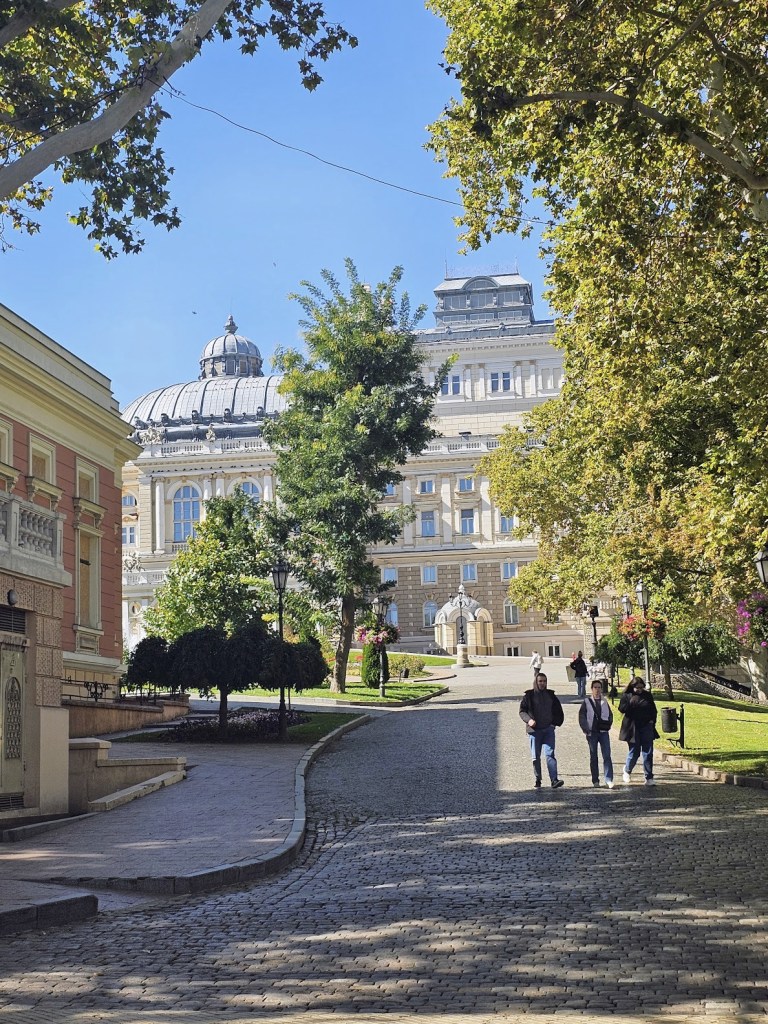
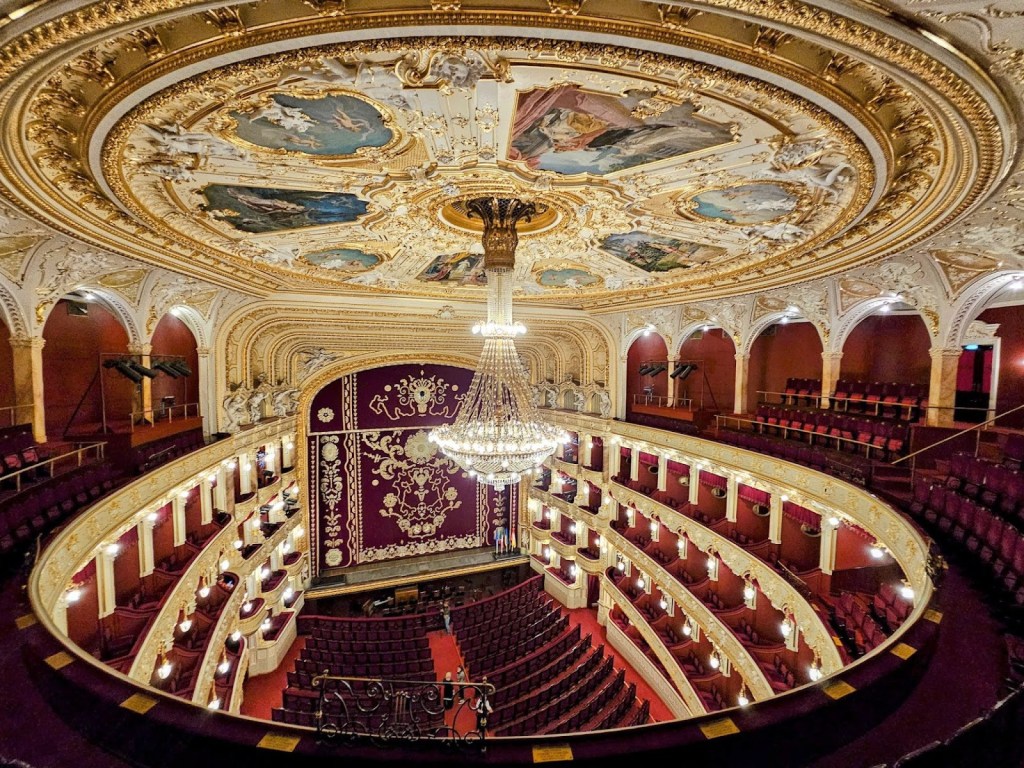
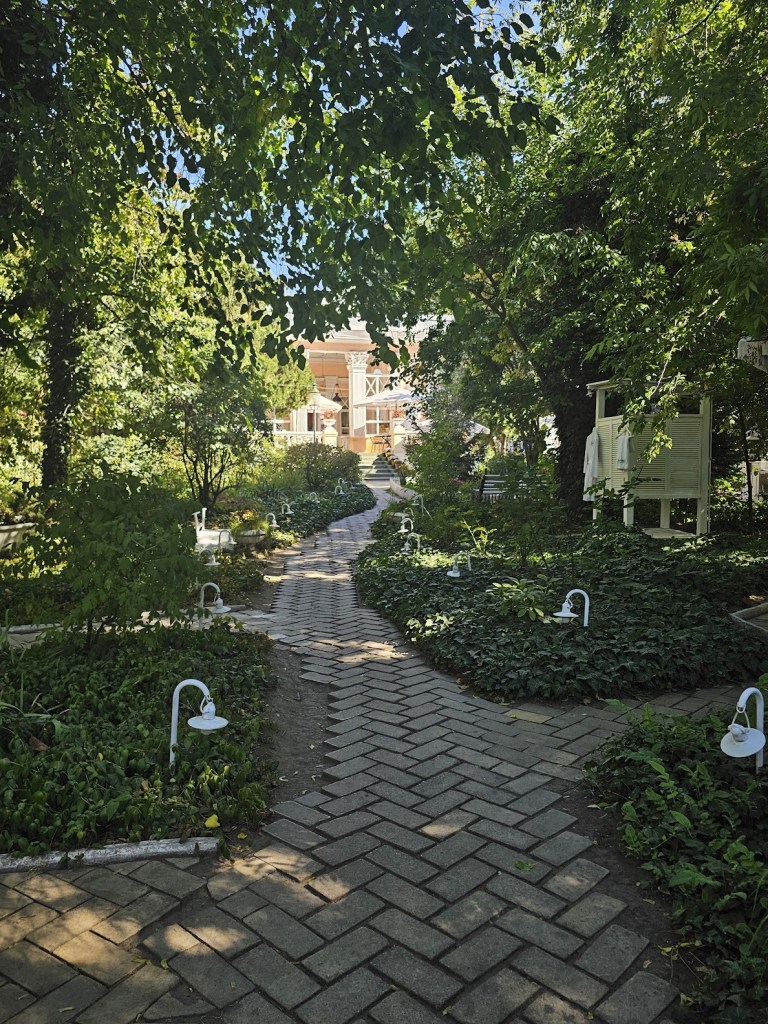
The center of Odesa’s old town surrounds the opera house, an ornate fixture that is every bit the rival of its other European counterparts. The interior is obsessively baroque, without any repetition between sculptures or frescos that decorate every tier – best observed with champagne in hand, courtesy of the remarkably friendly ushers who are happy for an American just to stand and gaze in awe. Though one can hear choral rehearsals while drinking coffee in a lush courtyard next door, I stay to watch a national competition of soloists reciting arias. Particular joy and reception is reserved for local contestants, whose friends and family light up in various corners of the orchestra level at their announcement.
Inseparable from Odesa’s identity is a tight sense of community, to the point that Ukrainians who have relocated due to the war feel left out. The whole city’s population is only a million people, which is to this guy from Brooklyn downright parochial. Monuments tend to memorialize local figures and events, including one plaque next to the opera house marking the residence of an honorary citizen of Odesa who worked on the train lines for 45 years. Though so many events of this war have reverberated around the world, Odesa’s sense of place in the wider context remains undiminished to its citizens. This sensation is manifested quite clearly in Odesa’s museums, badly battered by shelling from the beginning of the full scale invasion but still maintaining their charter to preserve the city’s and the world’s culture. I go to the archaeological museum first, with most of its few open spaces dedicated to Zmiinyi Island.
This tiny island – also known as Snake Island – about 75 miles southwest of Odesa in the Black Sea, is the site of a Greek temple to Achilles thought to date to the 5th century BCE. Discovered in 1823, the small shrine provided a wealth of artifacts and material from the generations of sailors that worshiped here. In 2022, the dig, a marine observatory, and a small garrison of border guards – many of whom were part time – represented the entirety of the population. The garrison’s response to a Russian call to surrender on the first day of the war is memorialized on trucks, cigarette lighters, and a postage stamp that sells out every time it is printed: “Russian warship, go fuck yourself.” What followed was a savage bombardment that leveled every structure on the island, including the archaeological site; at least one museum mourns not just the loss of world cultural heritage, but an icon of its community’s history.
The fine arts museum is equally battered, and walking through the former estate of the Polish magnate Seweryn Potocki that houses this institution is at times surreal. The catacombs beneath this structure were not part of any ancient network, but were dug out so Potocki and his pals would have a private tunnel to the sea. His cave system featured a German-style beer hall and a grotto-like entrance to the tunnel, meant to look like an ancient Greek shrine replete with fake stalactites but looking a little more like the Temple of Doom.
GoalsAll of one person on the tour underground appreciated my Indiana Jones reference
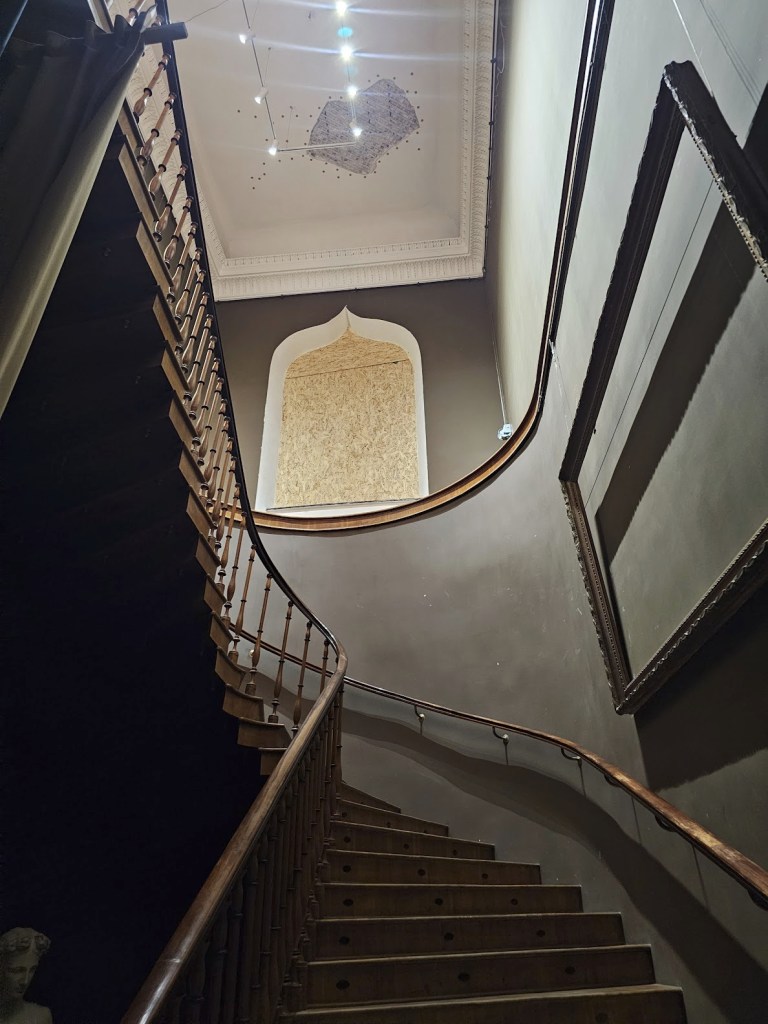
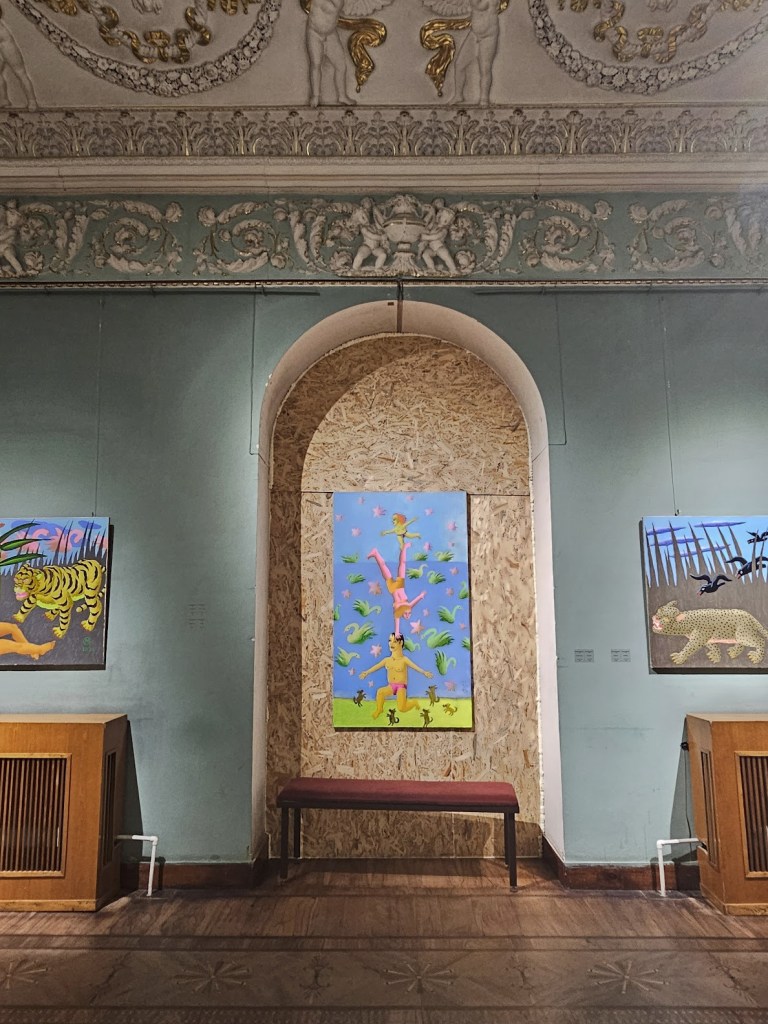
Above ground, darkened hallways where the windows have been replaced by particle board sport ornately patterned wood floors and portions of the ceiling where the latticework is not exposed are richly patterned with molding and putti. What artwork that is not put into safety and storage as the war rages is lovingly curated and captioned in English and Ukrainian; the dedication that forged institutions like these is undiminished. At the end of my visit I stop by the front desk, where a woman with poor English was the only person who could communicate with me over my admissions package. I brought her a message via translation app:
“Thank you,” I said. “What you are doing here is beautiful and important.”
She looked me square in the eye and simply responded, “We know.”
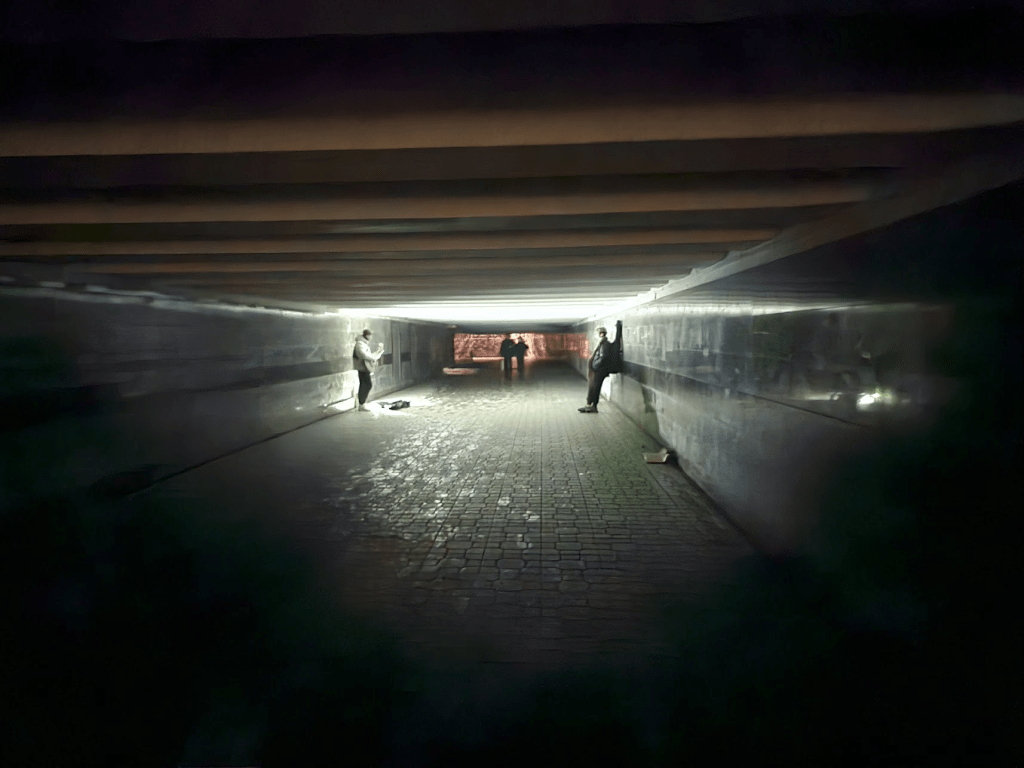
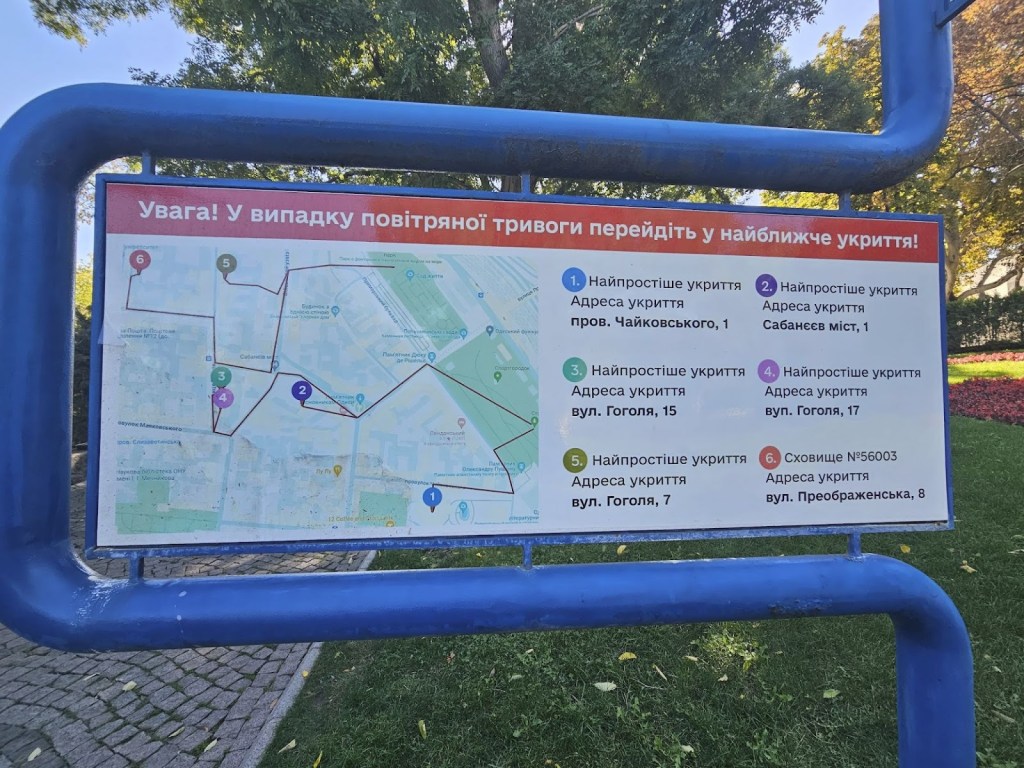
Guide to nearest bomb shelters
*Granted, your dispatcher probably drops a few “fucks” in the context of any conversation about sex work or crime. Confounding variable, I know.
**Comparing the mines that beachgoers here risk to the sea urchins all over Croatian beaches would be in very poor taste and so I have definitely not done that here.
†A man takes a new job in a remote Alaskan mining facility. The pay is excellent, but this straight man quickly notices that there are no women around, and leave to civilization is rare. He asks what people do to relieve tension and the foreman tells him, “Well, every month we get real drunk, take our ATV’s across the river, and fuck the moose that roam there.”
The new hire thinks he’s joking but plays a good sport when he rides out across the river with them. There he watches horrified as a host of burly Alaskan miners stage an unbridled orgy with a herd of moose. He returns to base sullen and disgusted, swearing he will never stoop to such measures.
Still, the pressure builds. Our hero is frighteningly lonely while the rest of the facility’s men keep their spirits up. Each month his resolve dims, until he tells his coworkers, “Alright, I can’t take it anymore. I’m joining this time.”
His coworkers are understanding and supportive of him in spite of his original judgement, and they cheer him on as he drinks his weight to buck himself up. When they head out across the river, he’s ahead of the crowd lest his momentum fail; this man struts right up to the first friendly moose he meets and starts going at it, but as he looks up he sees his comrades frozen in place as they stare at him incredulously.
“What’s the problem?” He shouts the question between grunts – “I’ve been watching you all do this for months!”
“There’s no problem,” the foreman steps up, “you just picked a fucking ugly moose.”
I held off on writing any account of the Donetsk region for a few reasons.
For starters, I was there for just three days as a policy and process observer. I was kept as far from danger as one can be in the Kramatorsk region, during a run of quiet nights when all of Russia’s long range aerial attacks were directed at Kyiv (I felt both guilty and grateful for having missed those). So many soldiers, volunteers, and aid workers – to say nothing of actual residents – risk far more than I do for a cause we all believe in. Also, it would have made my parents worry.
Still, so few people even in Kyiv have an understanding or appreciation of the realities of Donetsk Oblast; it won’t hurt to share my impression. Besides – and with all understanding afforded to the ongoing effects of war – the food just isn’t great;* I’m not expecting to be back.
Kramatorsk, founded in 1868, is a new city by the standards of Ukraine and was primarily identified as a factory town that reached a peak population of 204,000 in 1993. Its industrial nature helped make it a hub for Bolshevism during the uprisings of the early 1900s, in line with the rest of the region. The city was taken in 2014 by Russian paramilitaries during the first phases of the war and held for three months before it was retaken by Ukrainian regulars. Putin is surely still cursing that reversal: Kramatorsk and the neighboring Sloviansk are the largest cities in Donetsk still held by Ukraine and are thus the strategic fortresses in the oblast.
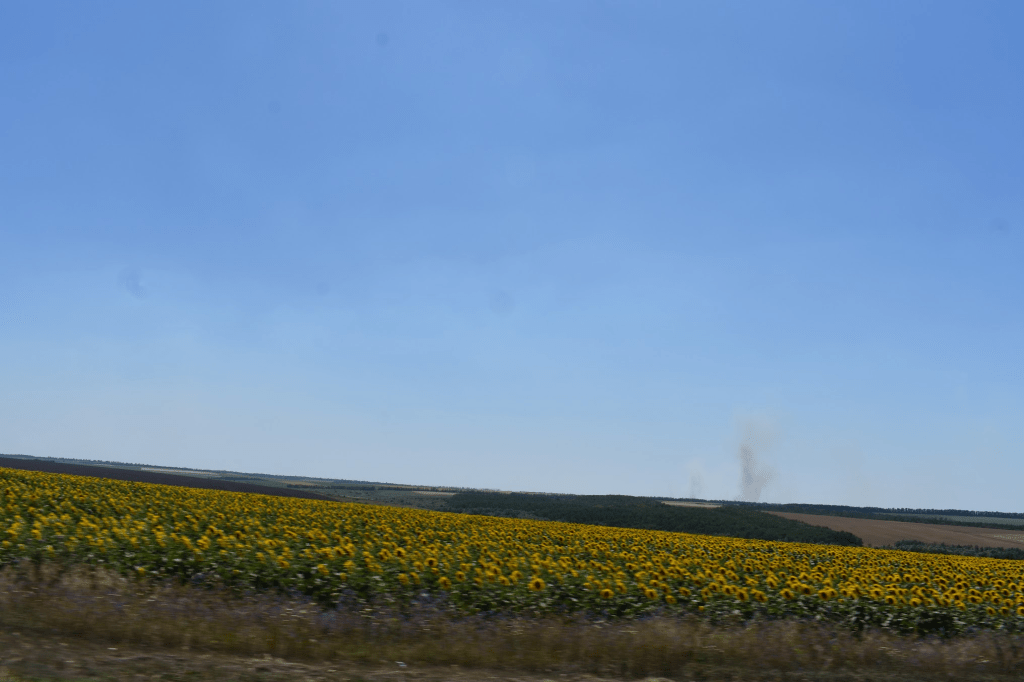
It is over 100 degrees Fahrenheit when I arrive by train in July and there are few surviving businesses with air conditioning or bathrooms. The roads are filled with a caterpillar of smooth and steady traffic composed of both civilian and military vehicles, passing through the sunflower fields below an enormous sky that evoke the nation’s banner. Huge plumes of smoke rise from the military installations the Russians hit with ballistic missiles and FPV drones, visible across the wide open farmland.
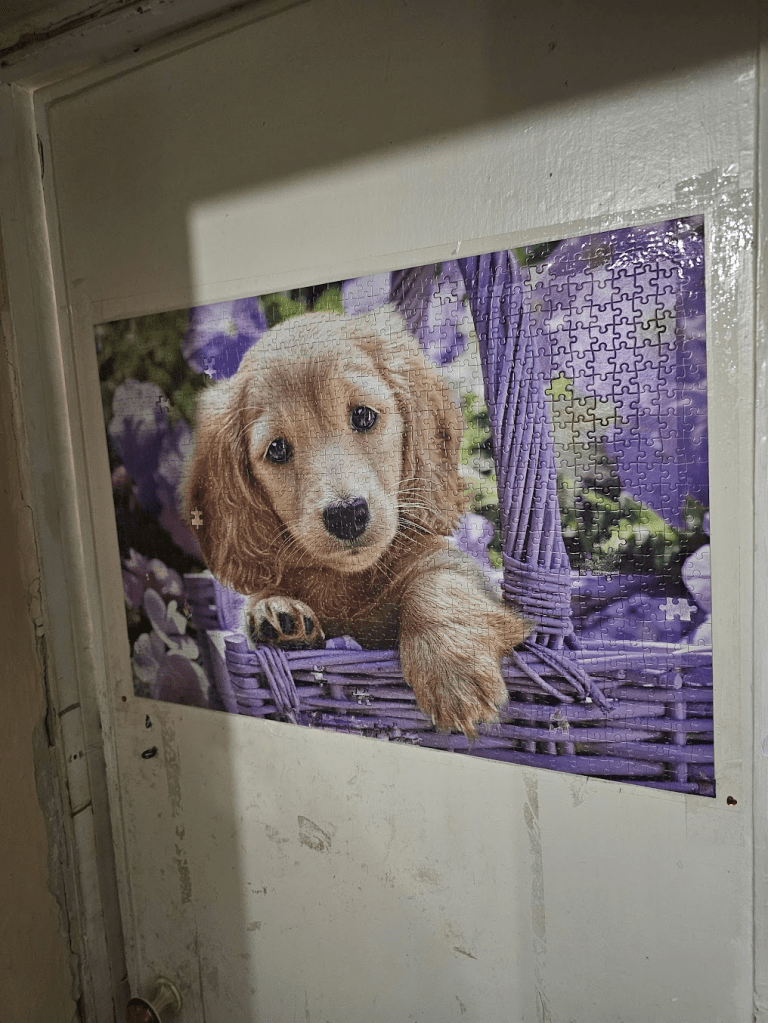
I stay in an evacuated apartment with the medevac team. I am immensely grateful for the free roof over my head, but luxuries are few for volunteer crews this close to the front lines; the fact that this space boasts running water three days a week puts it well above what most people can get on donations. Most of the drywall is stripped and scarcely a window pane remains whole in this two bedroom walkup that houses do gooders with the highest standards of British and American education; some surfaces and doors still sport Lisa Frank-style decoration, evidence of the children that once lived here… the absurdity often outweighs the poignancy in these parts. The guys will be out all day in these sweltering conditions – absent air conditioning even in the vehicles – and when they get back to Bravo House they typically just collapse on sunken mattresses with minimal conversation. Booze being a banned substance in Donetsk these days (not that any can’t be smuggled in), there’s not a whole lot to do other than talk around here – and everyone does enough of that in the car.
Frontline volunteers come in a range of profiles and it’s difficult to paint them with a single brush. Many do indeed come from tough backgrounds and operate cowboy operations that don’t file paperwork – a huge detriment to the cause of their evacuees, who end up in resettlement zones hundreds of miles away from their homes with none of the promised services for internally displaced people lined up. That said, these people regularly risk their lives in places others won’t; whatever their reasons, they perform an important service. There are also the more buttoned-up crews – such as the one I have attached myself to – who are representative of so many of the people here who have sacrificed lives of relevant comfort for the cause. They tend to use their real names rather than call signs; one medic puts it bluntly that it’s easier to track someone down by name if they fuck you over. The rivalries between frontline ambulance services are stark, and unfortunately no organization has yet stepped in to unite them for common cause.
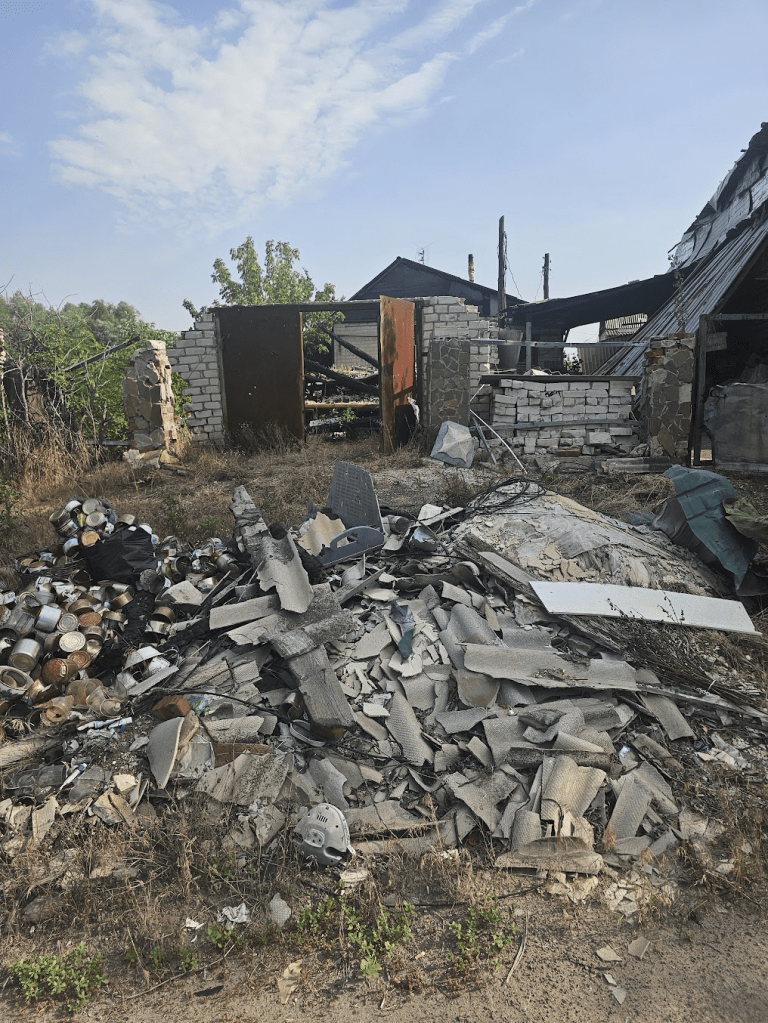
The rounds I attend are in the formerly occupied, now largely devastated city of Lyman – at this time around 15 kilometers from the front. The roads have been cleared, but they cut through heavily shelled and mined suburbs. One of the sights passed by is a youth summer camp a long way from future operations. A burned out vehicle on its side conveys a grave warning – “That wasn’t there last week,” says the doctor. Pavement gives way to dirt roads through neighborhoods of mostly destroyed buildings; even those still standing and occupied bear the scars of heavy damage. The dull thunder of explosions is unremitting; given the strategic importance of the area and the absence of air defenses, attacks are not just at any time – they simply do not stop.
One patient uses a mobility scooter – his second after Russian soldiers picked him off the street as he rode it. He was tortured for two weeks before he was pushed out again, scooterless. I don’t speak to him, but I’m told he has a “goofy” sense of humor.
Torture. It’s a word alien to the experience of people back home, so unfathomable is the distance a torturer feels from the people on whom they inflict pain. It is a regular practice for Russian soldiers, and it does not take speaking to too many people in Ukraine before you meet someone whose friend or family member was tortured to death. There is a deep frustration with American media, which reports every attack on Kyiv but not the continued violations of international law by soldiers fighting for Putin. Investigations by human rights lawyers have hit a funding wall, which is no surprise given how costly the analysis of evidence can be: Ukrainian dead are often returned as jumbled up parts in a body bag; an arm, a foot, a head if you’re lucky – all of these components from multiple people are often stuffed together into a single sack. There is no limit to a victim’s profile, and sexual violence is a feature of the experience for men and women alike. Soldiers at the front often reserve a “friendship grenade” for themselves in the event of imminent capture, while doctors close to the action will carry pentobarbital for the same purpose. Civilians are left without such recourse.
Though people grow used to the fear that flourishes in these parts, it does not go away; it wears and grinds on people who are subject to all of these horrors combined with the regular shelling aimed at dismantling any structure that can house Ukrainian defenses, block by block. Thus these people doing unglamorous work for no pay or recognition, of every description in appearance, present a sublime heroism that has not been surpassed in any age or any country. To walk amongst and speak with them is a humbling experience that I am grateful for, and I can only hope that the free people of the world are grateful for them as well.
* Save for a shashlik joint that’s locally beloved. For the uninitiated, shashlik is a Georgian barbecue style that, to the best of my palate’s appreciation, consists of enormous chunks of pork treated with heat. It’s a bit rudimentary, but also difficult to fuck up.
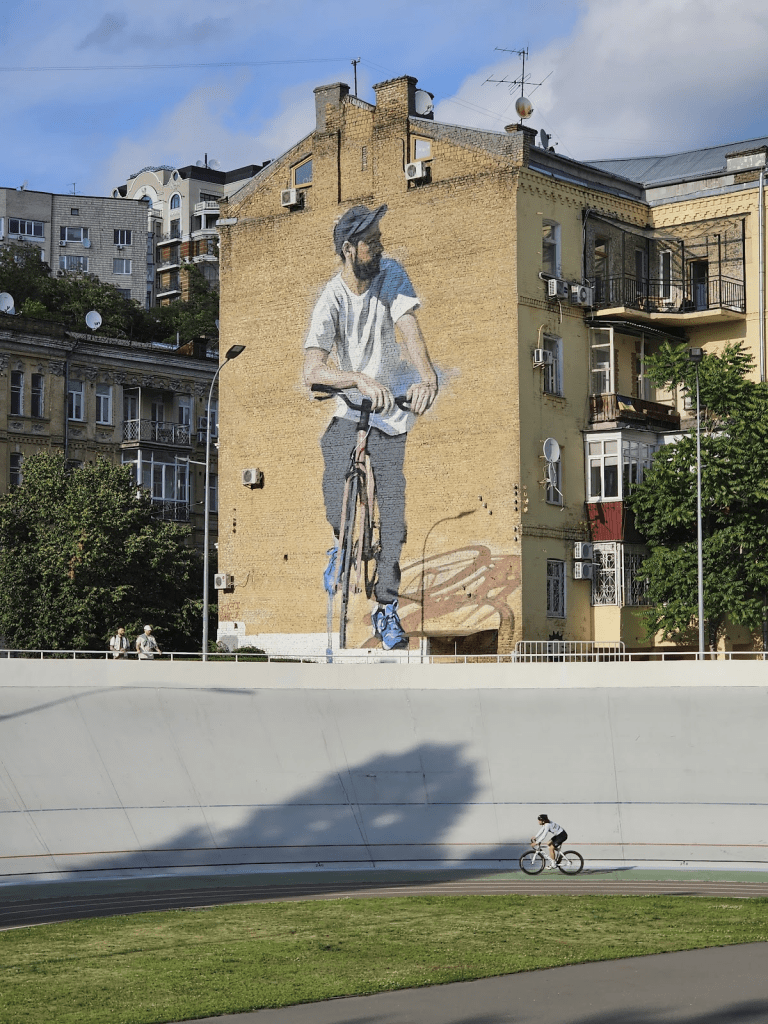
It was an adjustment to come to Kyiv after a first impression of Ukraine in Kharkiv. So distant did the city feel from everything I had seen in the east; every step west from the Ukrainian frontline adds a layer of insulation. I hardly knew what to write as well – so much of the city operates just as New York does: girls flog ribbons on Khreshchatyk – the main drag – just like the phony Buddhists would foist their medals on tourists in Times Square; cars are appropriately upscaled to reflect the wealth of the capitol; a recent rhinoplasty patient walks out of luxury department store; delivery mopeds test their fates against the laws of traffic and the concept of the right of way. Even the Jehovah’s Witness reps are here.
Kyiv, settled millennia ago but officially founded in 482 CE, gained regional prominence as a Viking trading port on the Dnieper in the 9th century. The urban plan of the walled city at the top of an eminently defensible (less so walkable) hill dates to the 11th century, when Kyiv was the center of one of the largest and most powerful European empires under Yaroslav the Wise. A favorite scrawl in a bar next to the reconstructed fortress gate displays his royal lineage traced all the way to England’s Elizabeth II (Charles doesn’t get a shout at time of writing).
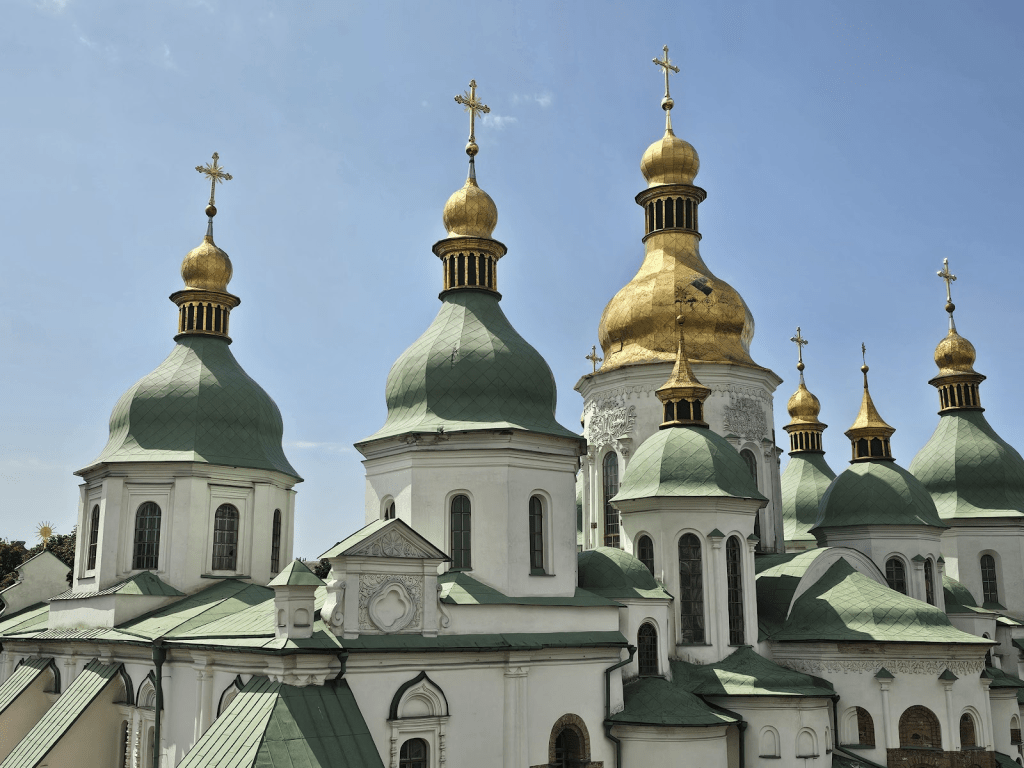
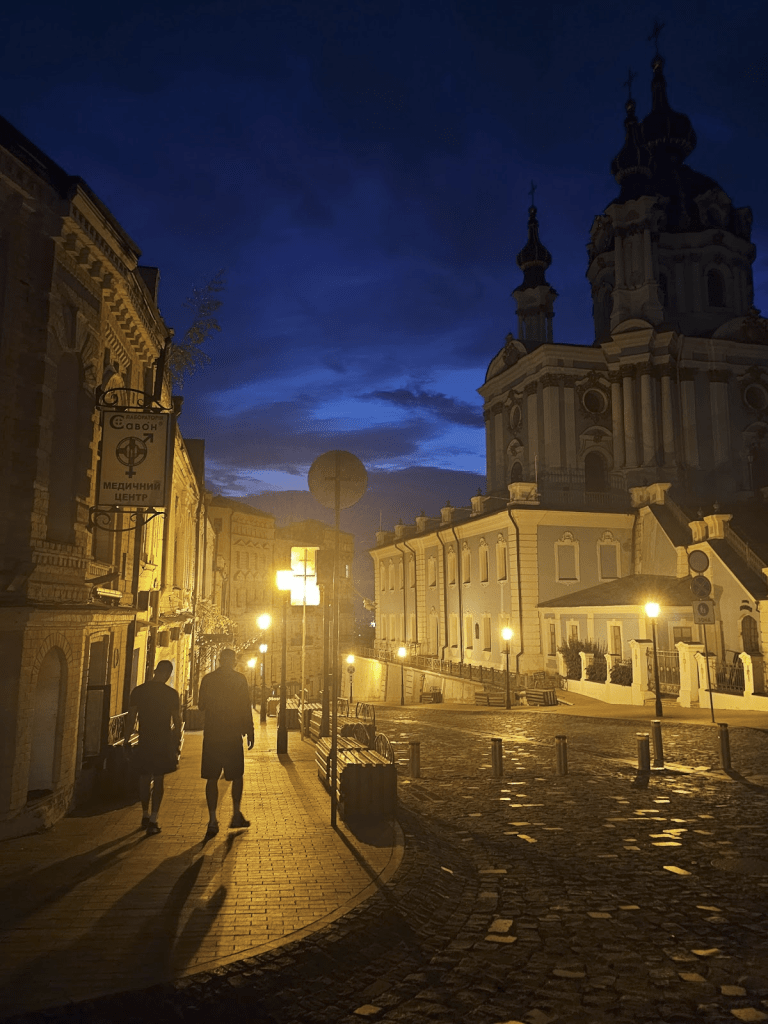
In the Old Town, the white walls and golden turrets of the churches sparkle in the sunshine; the immaculate parks featuring centuries-old trees are filled with the sounds of birds chirping – never drowned out by passing trucks or some asshole with a bluetooth speaker. A neighborhood in the shadow of St. Sophia’s Cathedral – one of the most beautiful that I have seen anywhere in the world – mostly features 19th and early 20th century Ukrainian Baroque architecture that reminds me in no small sense of Brooklyn Heights.
The food is excellent. The coffee is stellar. There is a conscientiousness pervasive in every interaction; a consistent sense of polity and rarely-raised voices. I never have to watch my back in Kyiv, so outrageous is the idea of any aggression expressed in the conduct of one’s day-to-day.
The people here are stunningly, absurdly beautiful – active, athletic, and fed with the standards of produce that only the breadbasket of Europe can provide. I was notified ahead of my arrival that I shouldn’t worry about what to wear; Americans are always the worst-dressed (a pattern I upheld). The drama and dynamism of the stories surrounding this city – from the revenge of Queen Olha for the murder of her husband, to the exiled King of Norway Harald Hardrada courting the Princess Elisiv – reflect the romantic nature of Kyiv, one of the truly legendary cities in world history. Flower shops are everywhere, and planters and chestnut trees line pristine streets.
There is the curfew, the missile and drone strikes, the military presence, the fortifications around buildings and monuments, the damaged buildings and structures. In the mornings, when the air is filled with smoke, the sadness and exhaustion after trying to sleep in crowded train stations while explosions rock the city is evident in everyone’s faces. Kyivans’ collective endurance is wrenching, all the more so for the attacks’ failure to shake the unflappable kindness a visitor can expect here.
In the afternoon, when the smoke has dissipated, the streets are crowded and bars and coffee shops fill to capacity. There’s a war on and people need to live.
This was not unusual for me; I have donated upwards of thirty times before in multiple countries. I normally would not even mention it, blood donation being something I regard as the responsibility of those who are able and thus not quite worthy of recognition. I tend not to offer kudos for properly disposing of one’s waste either.
Today was different. Kyiv was hit with a large attack last night, and smoke hung in otherwise clear air on what would have been a beautiful start to the day. The military hospital was closed when I arrived, as admissions of any sort are barred during air raid warnings; though the bombardments are rarely during the day in Kyiv, they certainly started early yesterday – my evening out was cut short by a massive blast signalling the beginning of the attack.
I was eventually escorted by an attending soldier to the donation clinic, passing through the hospital’s quadrangle filled with chestnut trees – the emblem of Kyiv. The sun shone brightly and birds sang; as usual, there are no jets overhead to drown them out. In a darkened wing, my health questionnaire was completed with the assistance of a young soldier, Andriy, who is learning English after being inspired by the music of David Bowie and Queen. Andriy is the spitting image of a young Nathan Fillion, and he proudly showed off his pendant with Bowie’s image embedded in a star shape.
The operation was conducted with usual efficiency and standards, but above average care. As I rose to leave, Andriy delivered the message from watching staff: on this day of all days it meant everything to Ukrainians to have an American in the clinic as the nation fights for the ideals founded in our Revolution.
Andriy’s linguistic labors paid off. Never one to accept a compliment gracefully, all I could do was nod dumbly as the room looked on. I exchanged handshakes with everyone, followed my escort off premises, and walked out into the fresh air – the smoke having dissipated. In all the brutality, sadness, and despair of these days there is simply no matching the quality of people and interactions that are to be met on a regular basis in Ukraine – such is the freedom of emotion and care. I am convinced that there is no more beauty in this world to be experienced beyond what is to be found in this time.
Through a deficit of bravery and the supremacy of self-interest, the home I love dearly imperils its own wellbeing and that of the Earth’s as indolence and cruelty join hands to march us into the morass. On a day commemorating the bravery of those who put their lives at stake to form a state to match their greatest ideals of pluralism, tolerance, compassion, self-determination, and dignity, I consider how few now open their eyes to the sufferings of their neighbors – let alone those of their countrymen and fellow human beings.
My contributions to this cause remain minuscule. What are you doing?
To begin with, I want to make it clear that I am FINE. Everyone I know is FINE, everyone they know seems to be FINE, and the beginning of The Accountant 2 was FINE until I fell asleep.
Finefinefinefinefine.
Many people are not fine. In Kyiv alone, at least four people were killed and twenty people were confirmed to be injured so far. Following Operation Spider’s Web, everybody knew this attack was coming but there is only so much that a civilian can do as Putin’s army lobs explosives over hundreds of miles into residential neighborhoods.
Kyiv was originally established in the 5th century but gained its significant stature in the 9th when it was used as a Viking trading center. The civilizations that became Ukraine, Russia, Belarus, and any number of regimes across Slavic history all trace back to this place. The city is modern, its denizens educated, and its food and coffee scene is fantastic.
During the day – even today – people dine in cafes, work on their balconies and terraces, and bitch about disrupted commutes (a rocket destroyed a train line last night, leading to kilometer-long bus queues). The atmosphere is social, and not a small portion of the population speaks English – my excuse for somehow having a worse command of the Ukrainian language than when I got here.
“Shootings” like last night’s struck the sense of safety of people who lived their lives just as peacefully as the average Manhattan yuppie. This city – and country – has been upended by a war that burns no less brightly for the lack of American attention. Last night’s attack was over a mile away, but the sound of rolling thunder kept the whole city awake. The mood on everyone’s faces is dark, and yet courtesy and kindness prevail. People have gotten used to this in the most painful fashion.
Meanwhile, two enfeebled man-children wielding outsized power in the most affluent country in the world engaged in a spat over social media. The New York Times shifted the shelling – again! – of the 7th-largest city in Europe down several pages so they can cover the tumble of an overvalued electric car company’s share price. Seriously, who gives a shit?
The weather is lovely and there is a leisurely crowd in the park, the rare sight owed to a low rate of air strikes in the past week. The wind ripples softly through the trees and there are smiles in every direction.
In the evening, the alarms begin and sound all night as the largest air raid offensive of the war is launched against Ukraine. Kharkiv is struck three times in the night.
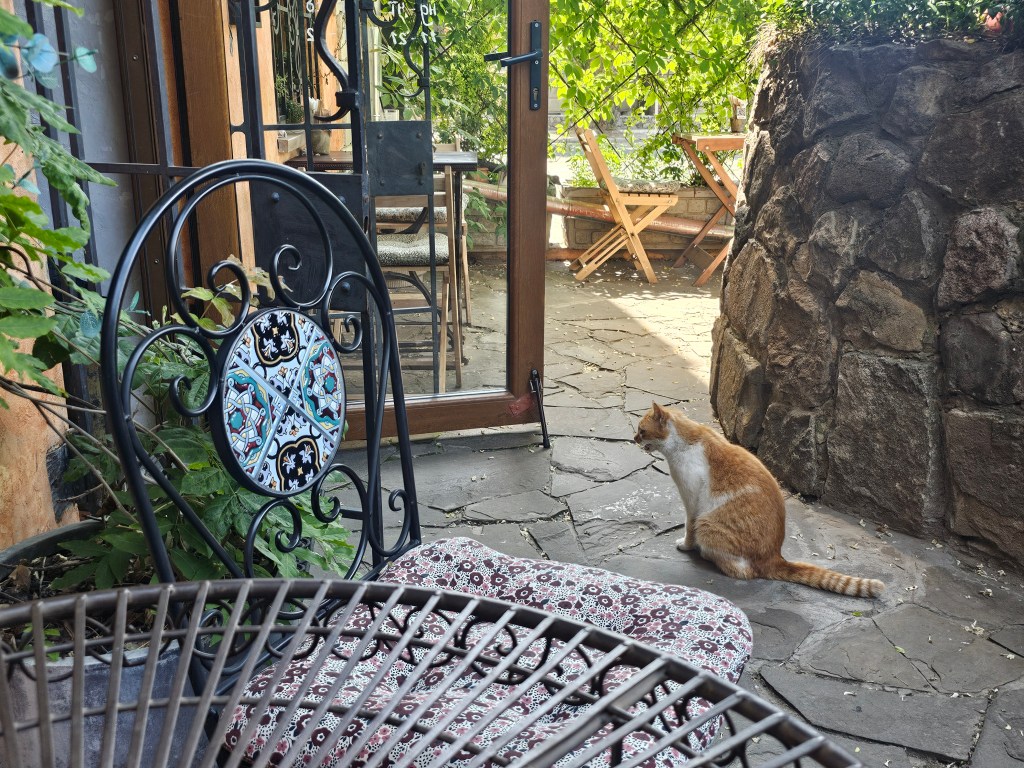
The next morning, I sit and read in a garden terrace with an espresso tonic; a cat appears from the entrance and announces itself until the cafe owner steps out with breakfast.
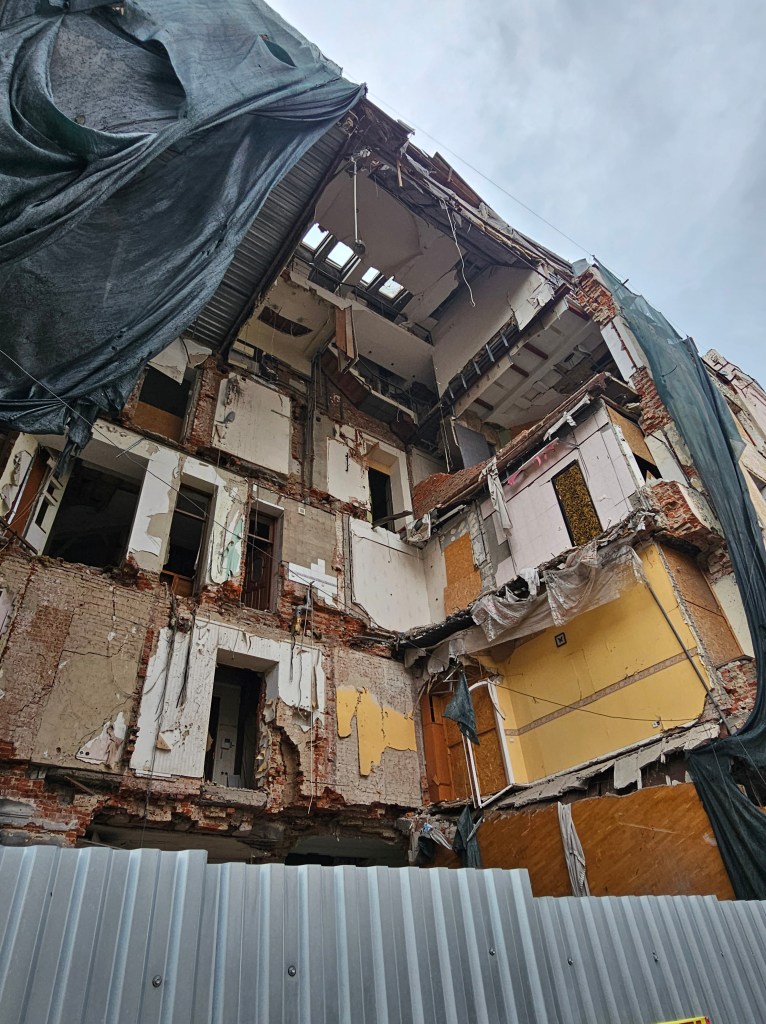
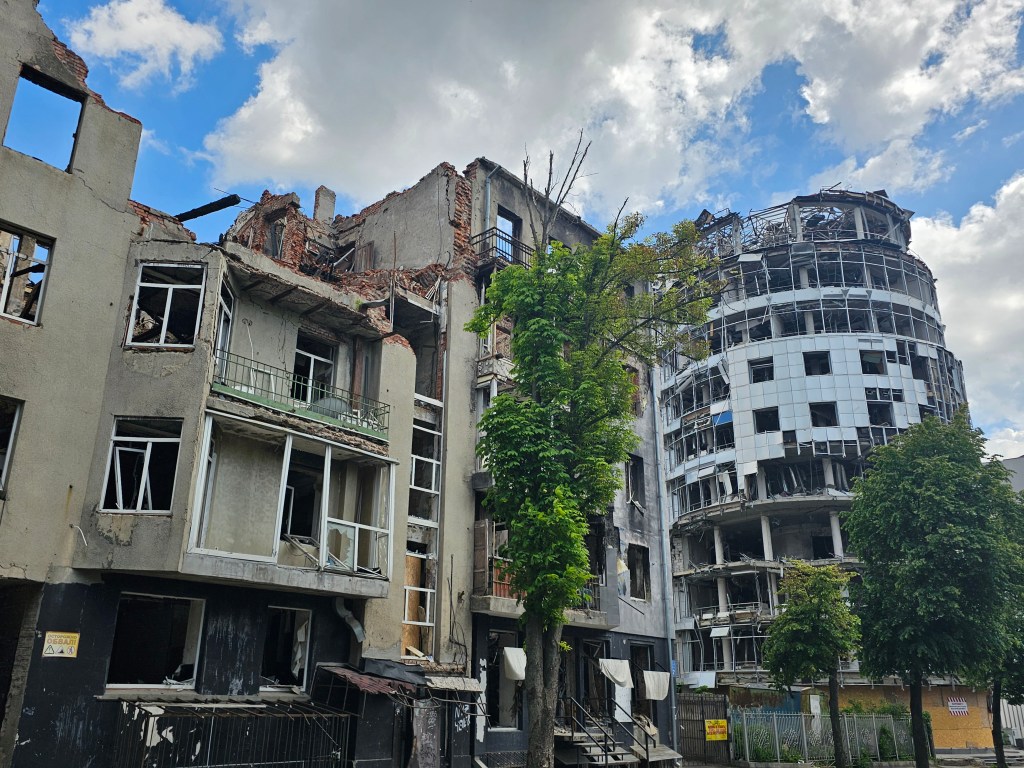
There is simply no communicating the extreme range of Kharkiv, a beautiful city on a hill between two rivers, beaten and torn by the Russian occupation and attacks. Walking down the poplar-lined streets of the central Shevchenkivskyi District, the sights at ground level are of wholesale damage from blasts and bullets. Untouched buildings are a rarity, while some have been ripped out entirely by air attacks that killed civilians and ruined families rather than offer any military advantage. Raised eyes will view the complete range of centuries of Ukrainian architecture, from the baroque, to the constructivist, to the many red bricked town houses not unlike those of Brooklyn.
The food is excellent, as is the drink and service. The coffee is a significant level higher: each of these many cafes, with its own loyal clientele, offers its own selection of beans and sweets; bitter slop in a well-branded paper cup with a line out the door would have no place here. If the clientele isn’t in uniform, they at least sport the waist packs containing their first aid materials.
There may not be warmth at all times from a population used to explosions and ephemeral aid, but there is always welcome no matter who you are or what you wear. You are here, and you matter. I walk down these streets with my head held high, the most American of idiots.
The Soviet legacy expresses in the form of the occasional preserved mural, plaque, or architectural flair – well-maintained Ladas still buzz down the street every so often – but there is nothing backwards in vision or behavior to be observed. A vibrant art and academic scene meets in bomb shelters, basement galleries, and coffee shop terraces on sunny days like this one. Even the hollows carved by three years of war and neglect serve as canvasses as one finds beauty in even the saddest voids visible from Kharkiv’s hallowed cathedrals to its opulent shopping mall.
Kharkiv: I did not know you last week, and I may not know you tomorrow; I hope the Kharkiv I met lasts long, rebuilds, and prospers.
I take the train to Kyiv tonight. I miss you already.
The walk down Sumska Street is to step into another city entirely separate from the rest of Kharkiv. Sidewalks widen, and the poplar trees that line the streets are replaced by towering spruces between the cafes and boutiques. The day is sunny, the breeze is cool, and the scene is not at all unlike an upscale neighborhood in Boulder, Colorado.
Very little of this scene is untouched by the war, of course. It remains rare to find buildings in Kharkiv that do not show damage from blasts or bullets, or at the very least sport particle boards to fill the spaces left by shattered windows. Many of the sumptuous restaurants and buildings that once lined this boulevard are closed and some have been taken over by tattoo shops, salons, and other low-overhead businesses.
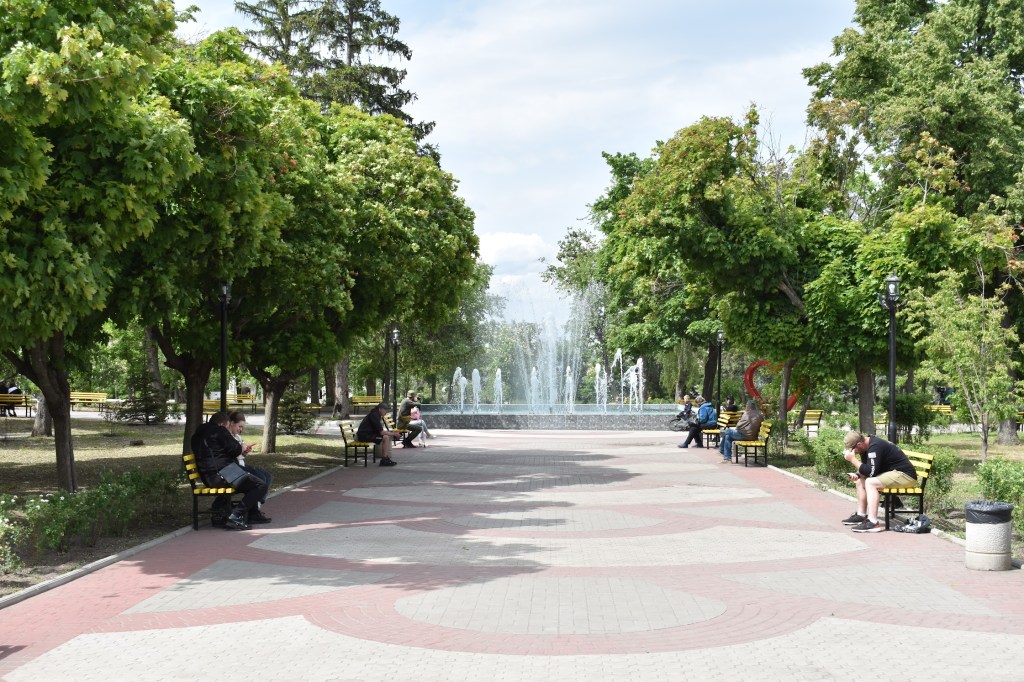
It is against this backdrop that I walked into Kharkiv’s Central Park, the effect of which was one of the strangest I ever experienced.
The park was opened in 1907. Originally, it was intended to be modeled off of Paris’s Bois de Boulogne; that vision lasted 21 years before the Soviets renamed it the Maxim Gorky Central Park for Culture and Recreation and started putting theme park rides in it. The statue of Gorky at the entrance was replaced in 2011 with a drab glass squirrel (Gorky was officially dropped from the name of the park in 2023). The new fixture is inarguably ugly, but the replacement is just as arguably worth it in exchange for reading Russian news sources decrying the dismantling of a Moscow icon. The culture wars continue apace with the shooting.
Once the squirrel is behind you (about 20 yards into the grounds) the park opens up. Stunningly manicured gardens of lawns, trees, and sculptures line a great walkway to a Ferris wheel – silent in times of war.
In fact, the whole park is silent.
I’m not the only person there this early afternoon, but other casual strollers are few and most of them are elderly and quiet. Later on, the groundskeepers return to their work keeping this place manicured. After meandering for a few hundred yards through a gorgeously arranged wooded area, I step into the patioed space containing the rides. Though the park was apparently heavily damaged in 2022, the roller coasters, carousels, fly-o-planes, and the Ferris wheel are by appearance all in immaculate condition. The rides sport themes ranging from ancient Egypt, to Japan’s samurai era, to the vibe of Universal Pictures’ early 1900’s horror movies. The sporting center boasts courts for tennis, basketball, beach volleyball, and pitches for 5-a-side soccer – each with seating for spectators and each ready to host any level of competition.
An eeriness reigns; there should be people here. Before the war, Central Park welcomed 3 million visitors every year and the facilities, attractions, and immense plazas are gaunt without them. The dormant cable car terminal lies protected by its phalanx of gondolas, in riot shield formation until the rides restart. An artificial pond is completely dry, its island garden in sharp relief; park goers still sit on the benches facing it – talking and selfie-ing as if it was still full.
And yet, Central Park remains beautiful. Parents with their children, couples on walks, and small groups of friends arrive with a more consistent afternoon sun. The bronze sculptures of various fauna and children playing will have to suffice for the activity the gardens are used to, but they do not leave the grounds feeling lonely. It may be a long walk back, but on the way I pay special attention to Kharkiv’s planted flora.
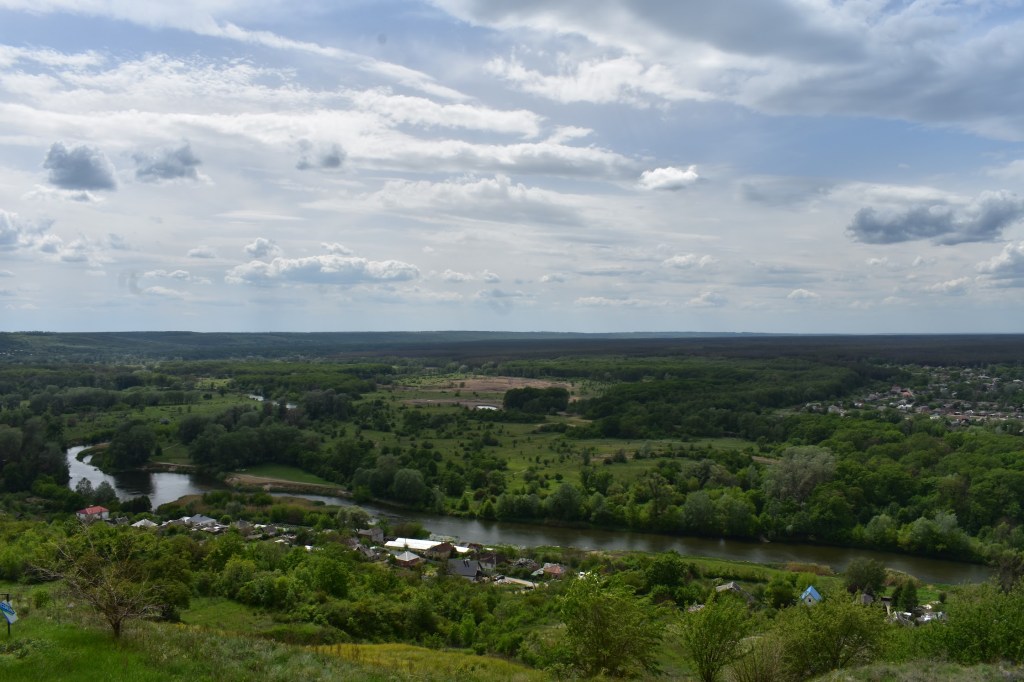
Izium is not some backwater Soviet industrial village. The area has been inhabited since at least the neolithic 3rd century BC; the city was founded in the 17th century and achieved its municipal title in the 18th. Much of the architecture dates back to the 18th and 19th centuries, when it held its status as a serious regional economic power on the Donets River. A promontory over the civic center allows stunning views of a beautifully situated town by the winding river with the vastness of the Ukrainian countryside visible beyond. As I walk around, children ride their bikes in the park next to the city square, the fountain providing a welcome respite from an unusually strong May sun.
Izium is the site of some of the worst Russian war crimes known to date, and showing up here with only a camera feels morally irresponsible.
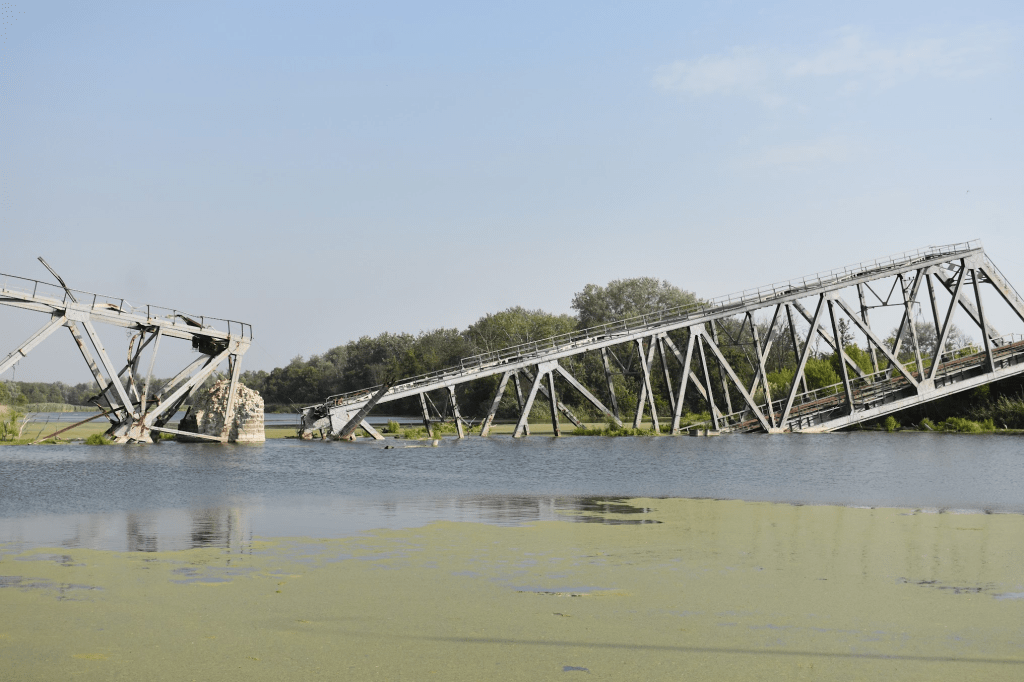
Farmland in want of care, checkpoints, and abandoned entrenched positions are the sights on our journey southeast to the formerly occupied town. A temporary bridge over the Donets gives us a view of the regular one, demolished by either Russian or Ukrainian forces. Houses bear the scars of bullets and explosives, and military and emergency vehicles and personnel assume a majority status.
We are taken on a grim tour. A five-story building is our first stop; in 2022, it was struck by a Russian MiG ahead of the Russian occupation and retreat that year. Fifty civilians, many of them children, were killed when the building was hit in its center of mass by a missile. Where once there stood a broad residential structure, there are now two towers either side of a crater filled with the detritus that was once the effects of its inhabitants. Standing by the mangled playground in what was once the building’s front yard, one now stares past abandoned playing fields all the way to Izium’s St. Nicholas Church, framed by rooms ripped open by the blast. Files are still piled in a cabinet with one door swinging open; boots sit on the bottom shelf of a wardrobe of rags; the back of a modular sofa hangs out over the steep drop into the void blasted into the residence. Soldiers may have taken a position in the destroyed building at some point, and bullet holes dot an enclosed balcony; the wind through its shattered glass sways patterned curtains inside. Memorials – mostly to children – have been planted in the yard, where one of the residents is still buried. Tributes to the lost have been painted on the entrances.
In the back, someone has spray painted a swastika.
We go to the cemetery. I have never seen any quite like it: the land was never cleared, and graves stretch as far as one can see through the dense pine forest. I am able to go only so far into it – the oldest grave I see is from 1994 – but from the sheer sense of boundless headstones in an endless forest, this is clearly a generationally hallowed ground. An Orthodox funeral is being conducted, and I do my best to keep my distance.
Russian forces, out of an echo of conscience or simple convenience, brought Izium’s dead here as they swept through the city. When Ukrainian forces retook the area a month later, they found unmarked graves containing 447 people. 22 were servicemen. 5 were children.
Though all known victims have been exhumed, the scars in the ground mark bear witness to the sadness that will forever be associated with this place. Bus-sized gouges in the ground mark where most were found, many with evidence of torture and summary execution.
Some were found in individual graves, which are now empty except for simple crosses of plywood that rest against the grave edges. One stands out: a carved Orthodox cross that may well have come from one of Izium’s ruined buildings.
I am called back to the car just after observing on slightly raised ground a newer grave; it is that of a 9 year old girl who died in 2023.
I buy lunch for everyone and feel like the biggest asshole on the planet. Back in Kharkiv, not 100 miles away, a dolled up 20-something walks her designer lap dog in an immaculately manicured public park.
Alarm after alarm buzzes around 8am as Putin flexes ahead of meetings in Turkey. They pose no danger to me, but I dare not restrict my notice settings any further.
It’s a beautiful day in Kharkiv. I have no meetings until the afternoon and the blood donation center is closed today, so I set off to get some tourism in.
One of 11 surviving Mk V tanks from 1918. Sends a message.
It’s as good an opportunity as any to get a sense of the religious landscape of Kharkiv. My first stop is the Monastery, in the dead center of Kharkiv and running since the late 17th century.
The world shifts as you pass through its gates and Ukrainian Orthodoxy shows its true force. A pall of reverence hangs over the courtyard and priests wear their authority with chests high. Walking into the Intercession Cathedral, I stand out more than I have at any point in Ukraine so far – not least because I look up at the frescos covering every surface instead of down in worship. Dozens of icons hang in the dark rooms and the faithful trickle in with such regularity to genuflect before them.
This place has made no preparations for tourism; it is busy enough as a working religious institution.
The air is cold and light with a breeze filtering through the fine ventilation, but sweet with incense. Still, I don’t hang around – the atmosphere isn’t entirely welcoming.
An unwelcoming place
It is unclear whether these frames used to hold sun lenses, but I choose to believe they did
There’s not much to the interior of the Church of the Holy Myrrh-Bearing Women, and the context I get from Google reviews is that nobody seems to like it. Sure the church site dates back to the 17th century, but the modern rebuild was completed in 2015. When the Office of the Security Service next door was bombed in 2022, the church suffered some damage to its domes and was hit by some small arms fire during the street fighting; it’s in largely good shape… that being a relative measure.
Some context. For additional context: the Ukrainian Orthodox Church voted to fully separate from the Moscow Patriarchate in 2022.
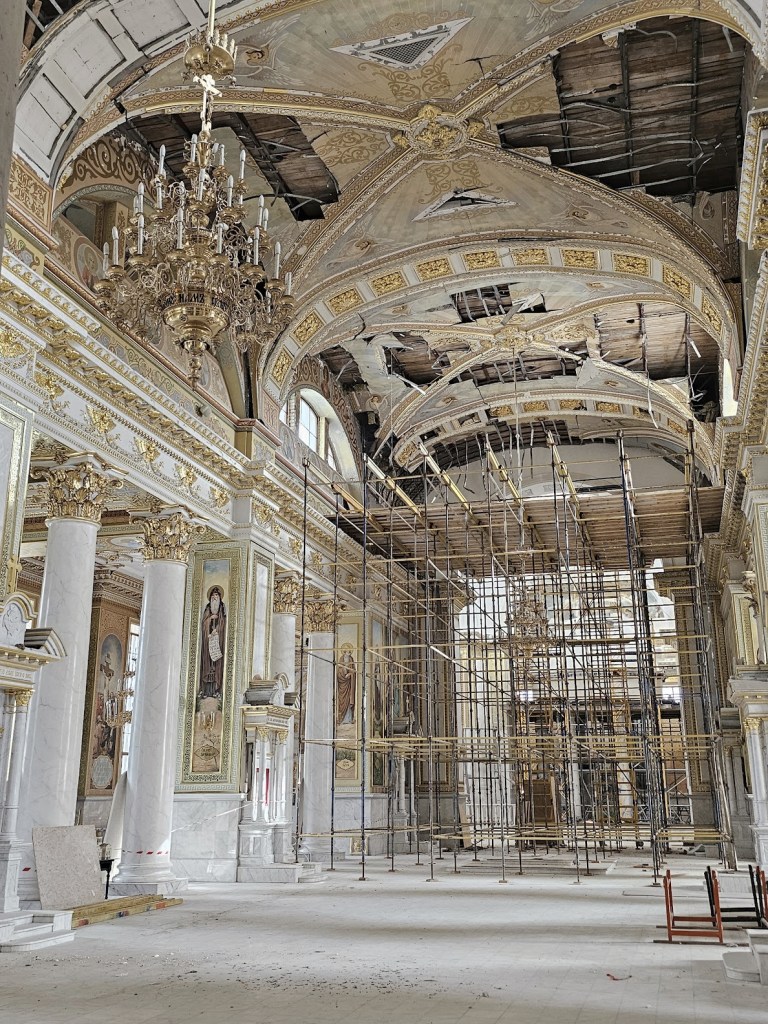
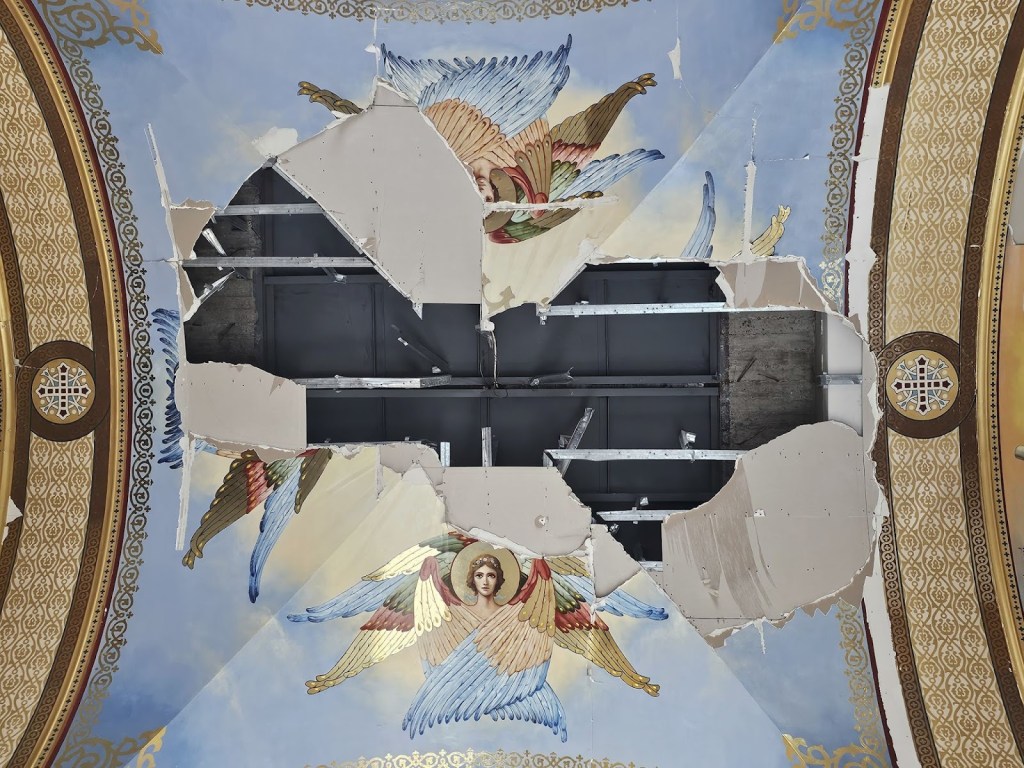
The Assumption Cathedral, actually dating to the 17th century, was struck by a Russian missile in 2022 while civilians took refuge inside. The reconstruction will be beautiful, with a beautiful sky blue chosen for the ceiling and flowery molding patterning every rib. Sunlight streams in without any stained glass, illuminating brand new icons hanging over a temporary wooden flooring.
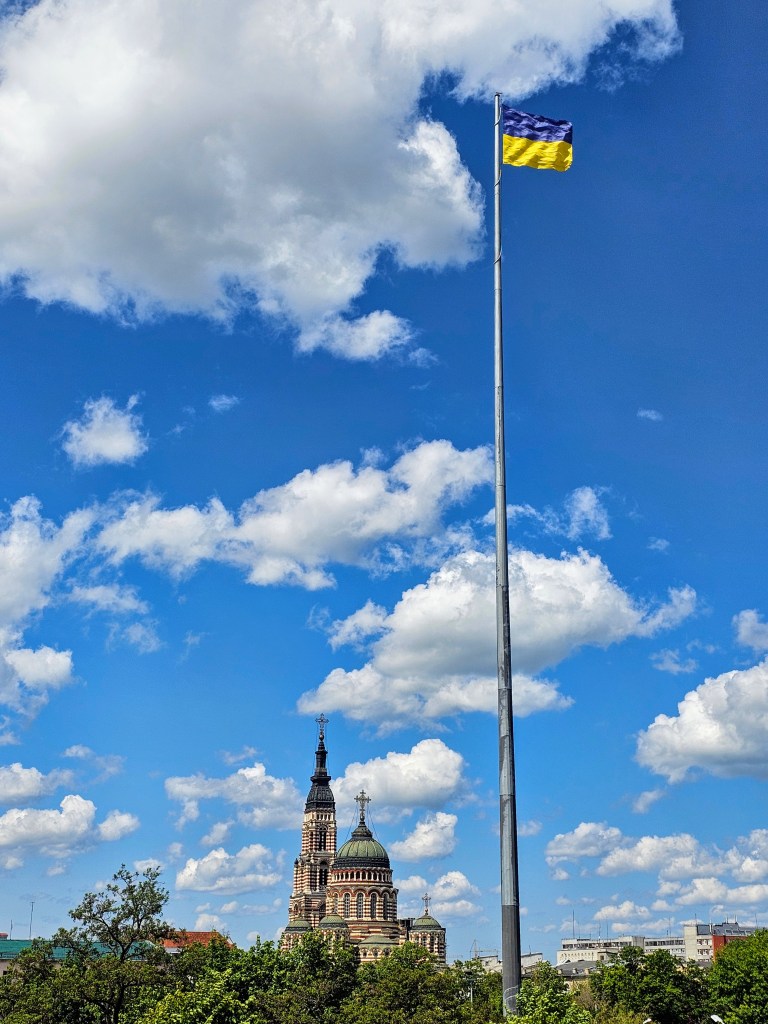
Across the river is the Annunciation Cathedral – the largest cathedral in Eastern Europe – completed in 1901. It’s a bit far, a bit recent, and I just don’t feel like going. Tall as it stands in an expansive sky, it is dwarfed in perspective by an enormous flagpole in the foreground. The Ukrainian flag billows high with a constant wind ensuring it never drops. The whip of the banner carries over the air, rising above the volume of traffic far below it.
On the way back up the hill, I pass the monument originally built by the Soviets for the “Heroes of the October Revolution.” Ukrainian activists struck the original plaques and have simply renamed the site “Eternal Flame.” The flame is out.








 Letters from the Republic