Letters from the Republic

Blog from Ukraine so I can avoid telling the same stories 50 times.

  • May 17, 2025

    Today I went to Izium.

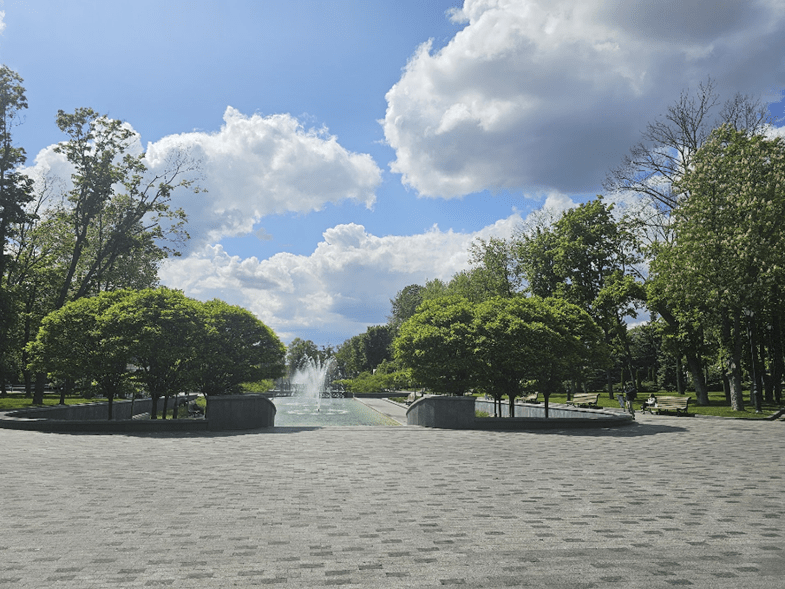
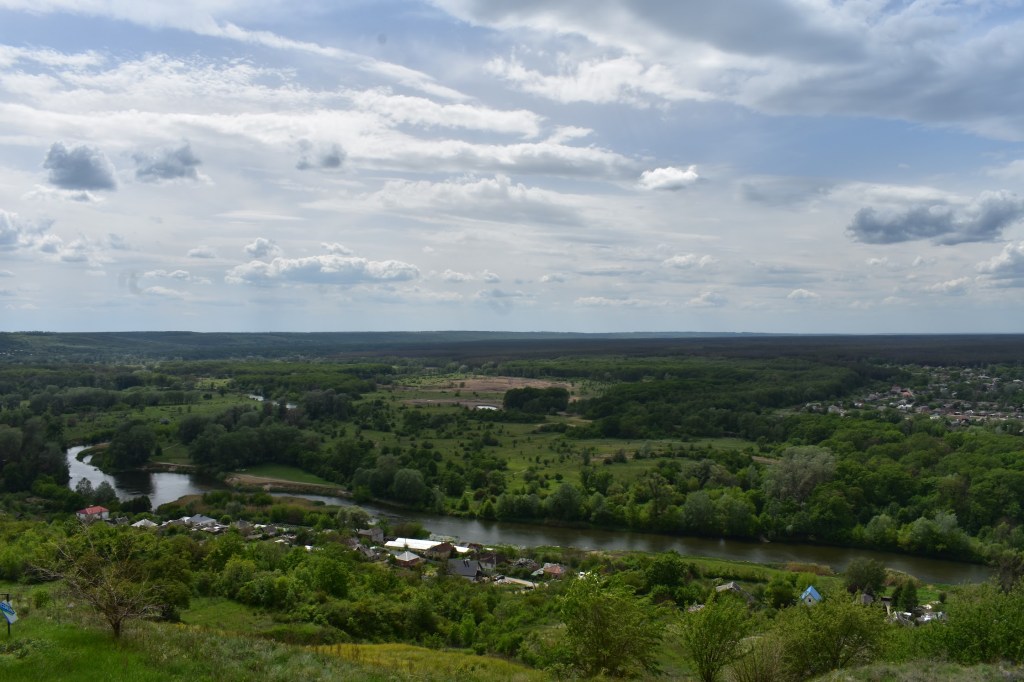
    Izium is not some backwater Soviet industrial village. The area has been inhabited since at least the neolithic 3rd century BC; the city was founded in the 17th century and achieved its municipal title in the 18th. Much of the architecture dates back to the 18th and 19th centuries, when it held its status as a serious regional economic power on the Donets River. A promontory over the civic center allows stunning views of a beautifully situated town by the winding river with the vastness of the Ukrainian countryside visible beyond. As I walk around, children ride their bikes in the park next to the city square, the fountain providing a welcome respite from an unusually strong May sun.

    Izium is the site of some of the worst Russian war crimes known to date, and showing up here with only a camera feels morally irresponsible.

    Farmland in want of care, checkpoints, and abandoned entrenched positions are the sights on our journey southeast to the formerly occupied town. A temporary bridge over the Donets gives us a view of the regular one, demolished by either Russian or Ukrainian forces. Houses bear the scars of bullets and explosives, and military and emergency vehicles and personnel assume a majority status.

    We are taken on a grim tour. A five-story building is our first stop; in 2022, it was struck by a Russian MiG ahead of the Russian occupation and retreat that year. Fifty civilians, many of them children, were killed when the building was hit in its center of mass by a missile. Where once there stood a broad residential structure, there are now two towers either side of a crater filled with the detritus that was once the effects of its inhabitants. Standing by the mangled playground in what was once the building’s front yard, one now stares past abandoned playing fields all the way to Izium’s St. Nicholas Church, framed by rooms ripped open by the blast. Files are still piled in a cabinet with one door swinging open; boots sit on the bottom shelf of a wardrobe of rags; the back of a modular sofa hangs out over the steep drop into the void blasted into the residence. Soldiers may have taken a position in the destroyed building at some point, and bullet holes dot an enclosed balcony; the wind through its shattered glass sways patterned curtains inside. Memorials – mostly to children – have been planted in the yard, where one of the residents is still buried. Tributes to the lost have been painted on the entrances.

    In the back, someone has spray painted a swastika.

    We go to the cemetery. I have never seen any quite like it: the land was never cleared, and graves stretch as far as one can see through the dense pine forest. I am able to go only so far into it – the oldest grave I see is from 1994 – but from the sheer sense of boundless headstones in an endless forest, this is clearly a generationally hallowed ground. An Orthodox funeral is being conducted, and I do my best to keep my distance.

    Russian forces, out of an echo of conscience or simple convenience, brought Izium’s dead here as they swept through the city. When Ukrainian forces retook the area a month later, they found unmarked graves containing 447 people. 22 were servicemen. 5 were children.

    Though all known victims have been exhumed, the scars in the ground mark bear witness to the sadness that will forever be associated with this place. Bus-sized gouges in the ground mark where most were found, many with evidence of torture and summary execution.

    Some were found in individual graves, which are now empty except for simple crosses of plywood that rest against the grave edges. One stands out: a carved Orthodox cross that may well have come from one of Izium’s ruined buildings.

    I am called back to the car just after observing on slightly raised ground a newer grave; it is that of a 9 year old girl who died in 2023.

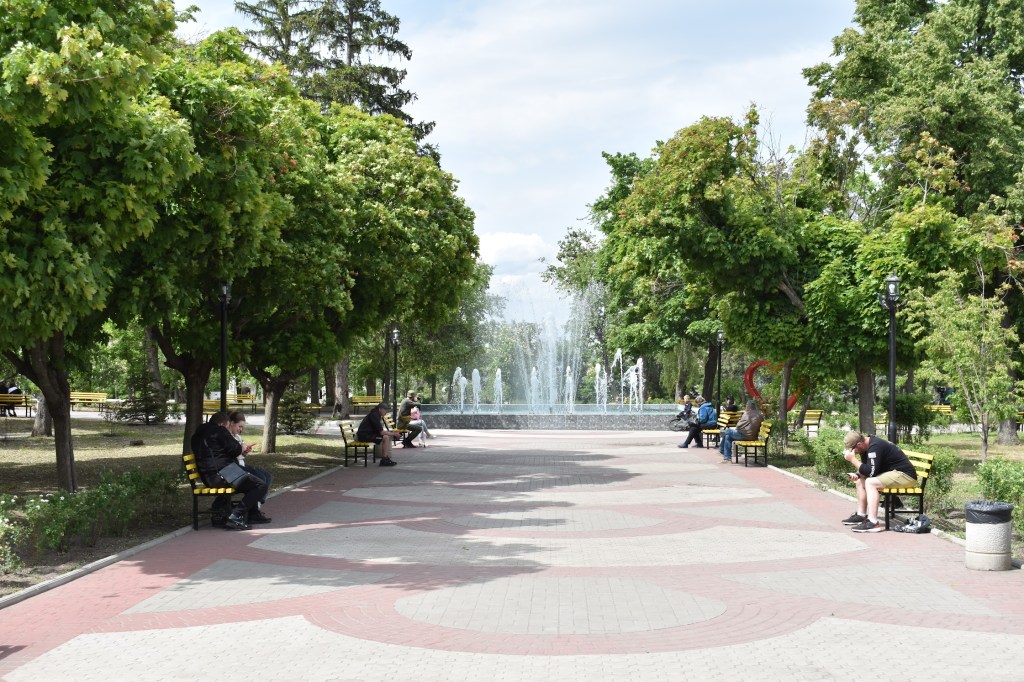
    I buy lunch for everyone and feel like the biggest asshole on the planet. Back in Kharkiv, not 100 miles away, a dolled up 20-something walks her designer lap dog in an immaculately manicured public park.
  • Alarm after alarm buzzes around 8am as Putin flexes ahead of meetings in Turkey. They pose no danger to me, but I dare not restrict my notice settings any further.

    It’s a beautiful day in Kharkiv. I have no meetings until the afternoon and the blood donation center is closed today, so I set off to get some tourism in.

    One of 11 surviving Mk V tanks from 1918. Sends a message.

    It’s as good an opportunity as any to get a sense of the religious landscape of Kharkiv. My first stop is the Monastery, in the dead center of Kharkiv and running since the late 17th century.

    The world shifts as you pass through its gates and Ukrainian Orthodoxy shows its true force. A pall of reverence hangs over the courtyard and priests wear their authority with chests high. Walking into the Intercession Cathedral, I stand out more than I have at any point in Ukraine so far – not least because I look up at the frescos covering every surface instead of down in worship. Dozens of icons hang in the dark rooms and the faithful trickle in with such regularity to genuflect before them.

    This place has made no preparations for tourism; it is busy enough as a working religious institution.

    The air is cold and light with a breeze filtering through the fine ventilation, but sweet with incense. Still, I don’t hang around – the atmosphere isn’t entirely welcoming.

    An unwelcoming place

    It is unclear whether these frames used to hold sun lenses, but I choose to believe they did 

    There’s not much to the interior of the Church of the Holy Myrrh-Bearing Women, and the context I get from Google reviews is that nobody seems to like it. Sure the church site dates back to the 17th century, but the modern rebuild was completed in 2015. When the Office of the Security Service next door was bombed in 2022, the church suffered some damage to its domes and was hit by some small arms fire during the street fighting; it’s in largely good shape… that being a relative measure. 

    Some context. For additional context: the Ukrainian Orthodox Church voted to fully separate from the Moscow Patriarchate in 2022.

    The Assumption Cathedral, actually dating to the 17th century, was struck by a Russian missile in 2022 while civilians took refuge inside. The reconstruction will be beautiful, with a beautiful sky blue chosen for the ceiling and flowery molding patterning every rib. Sunlight streams in without any stained glass, illuminating brand new icons hanging over a temporary wooden flooring.

    Across the river is the Annunciation Cathedral – the largest cathedral in Eastern Europe – completed in 1901. It’s a bit far, a bit recent, and I just don’t feel like going. Tall as it stands in an expansive sky, it is dwarfed in perspective by an enormous flagpole in the foreground. The Ukrainian flag billows high with a constant wind ensuring it never drops. The whip of the banner carries over the air, rising above the volume of traffic far below it.

    On the way back up the hill, I pass the monument originally built by the Soviets for the “Heroes of the October Revolution.” Ukrainian activists struck the original plaques and have simply renamed the site “Eternal Flame.” The flame is out.

  • My phone screams at me. It’s around 3am and I’m getting a perfectly timed reminder that I need to tune my air raid warning system correctly. I grumble about it into my pillow for about two hours before I pass out again.

    Tuning assistance in the morning comes with a reminder to be glad this was a false alarm. Sure am.

    Part of my day is dedicated to getting everything I need for my planned extended stay in Ukraine: mainly a new sim card and anything I didn’t want to jam into a carry on. The latter is basically just bath and grooming supplies, but honestly those aren’t as easy to procure as expected.

    English speakers in Kharkiv are pretty rare, which is fairly understandable given the distance from English speaking nations and the sudden American abdication from global aid efforts. My refined four-step skincare process is lost in translation app as the 19-year-old beauty consultant selects a face wash for me with Ukrainian labeling. Sure, that works. A similar challenge faces me at the barber. I am looking forward to cleaning myself up a bit after not shaving for a few days, but I soon realize the imperial measurements of barber tools in the US do not convert easily. I show her a rare portrait that I like and have my phone say “make me look pretty” in Ukrainian.

    I walk around the city center in the evening, set for an early night. While Kharkiv is certainly more European in attitude – and bears the architectural hallmarks of a former Soviet city – I am struck by all of the buildings and scenes that bear a striking similarity to home. Pedestrians pass buskers without acknowledgement in front of 19th century buildings; 20-somethings rave on a strip not unlike the Bowery; artists hang out in cafes and gather in the park. As my guides told me of the retaking of the city after Russian occupation in 2022, I wondered how quickly life returned to this.

    Earlier, I walked up to the Church of the Holy Myrrh-Bearing Women – a 17th century church with its largest domes missing some of their gold foil.

    There were bullet holes in it.

  • Regards from Kharkiv.

    I actually arrived yesterday, but after a journey spanning 4,900 miles (over 850 overland) and 60 hours spent between two cars, two planes, and three trains I needed to call an early night.

    Putin’s invasion has rendered passenger air travel nonviable, and so the most practical method for non-official persons to traverse a county of over 223,000 square miles is by train. There is variable wisdom amongst regular travelers on this route over whether to go via Warsaw, Krakow, or Moldova; Krakow seems most popular. From Krakow, one takes the Polish intercity rail to Przemysl, near the Ukrainian border. There are two trains east from there every day and they are packed – mostly with women, but also a few children and men who stand over everyone like monoliths.

    Some chatter, but most wait with resigned boredom for the immigration checkpoint to open. The Poles were smiley and solicitous towards me in my short time with them, and some even asked me for directions (they cut themselves short before my lips even completed their stretch to a sheepish, idiotic grin); meanwhile the Ukrainians just give me the occasional glance while I wonder if I stand in stark relief to the scene as a particularly gormless American.

    Some will raise their eyes to mine and we will roll them in solidarity as the citizens of eastern Europe’s tech hub are forced to wait outside and unsheltered in a Polish border town.

    I don’t mean to knock Przemysl (I will not tell you how to pronounce it), of course. The city traces its roots to the 8th century and has a population of 55,000 with a preserved historic center of its own. It is also one of five Polish municipalities that President Zelenskyy awarded as “Rescuer Cities” for services to Ukrainian refugees during the war. The conduct of Przemysl’s residents has been commendable.

    Eventually, due to confusion in the queue, the man in front of me tries initiating a conversation in Ukrainian (maybe I blend in after all). After I helplessly stammer some apology, he calls to the people behind me for anyone who speaks English. That’s nobody, as it turns out, but two girls behind me know “follow me,” which works for now. They also know “where are you from,” but after I answer, they giggle, and we give a smiley nod to each other, discussion ends.

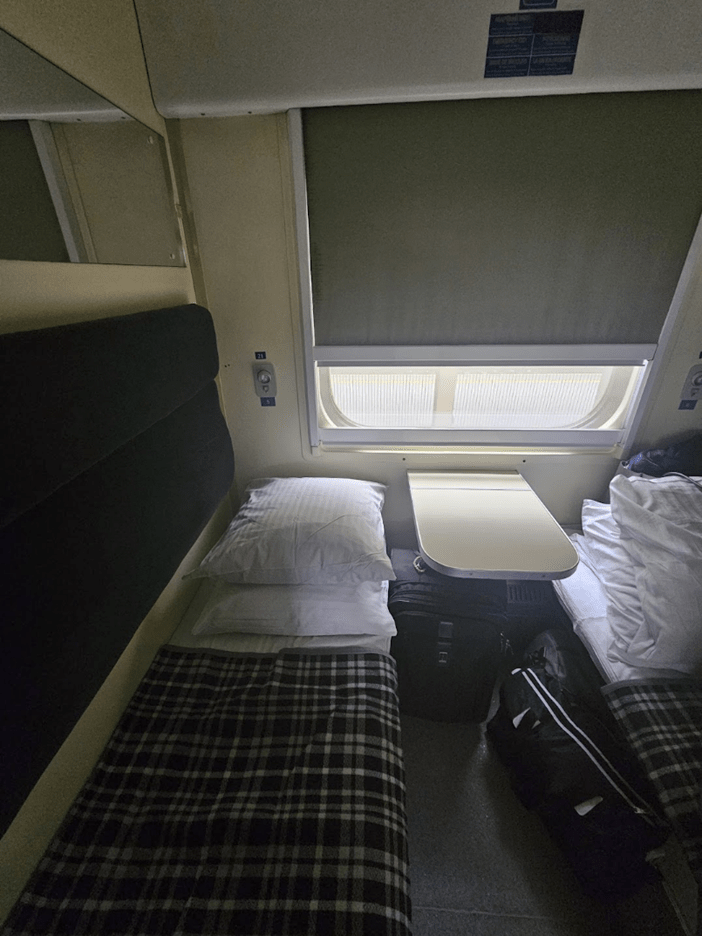
    Passport control is a rapid formality, and I clamber into a train not of this century. At recommendation, I have opted for the “luxe” sleeping car – with padding.

    My berth for the next 573 hours of my LIFE

    My berth for the next 573 hours of my LIFE

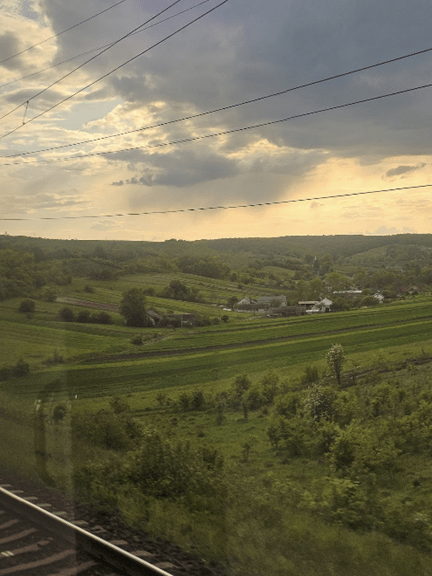
    Looking out my compartment window as I drifted in and out, much Ukraine kind of looks like Pennsylvania: farms, forests, rolling hills, and small towns built around domed structures, while modern residential high rises mark denser populations. Occasionally you see remnants of unfinished developments and nature reclaiming aging vestiges of industry; Steelers would feel right at home.

    On the road to Pittsburgh

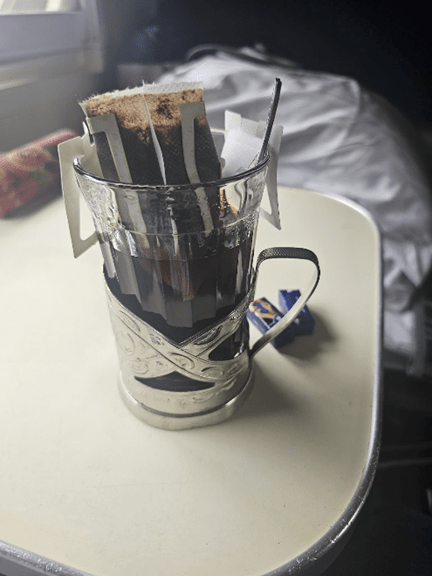
    My roommate is a woman I estimate to be in her 60s named Luba, and we have some short interactions via the Google translate app. This carries some pitfalls, as evidenced by her advice to “cook” my passport; I’m still not sure what that means. Conversation is sparse, but considering the tightness of quarters, that may not be a bad thing. That said, both the train and my company have their charms: even without any English speakers, there is a refreshing air of humor and genuity. The coffee is good, too.

    23 hours after my train from Psemysl left the station, I disembarked to a warm reception in an impressive city. Honestly, the ride wasn’t too bad. Slept a lot.

    Kharkiv dates its incorporation to the 17th century, though most landmarks were built in the 20th. The buildings and parks are expansive and wonderfully well-kept, and my guide is suitably proud of his city and its presentation. Several governmental landmarks as well as civilian buildings bear the deep scars caused by Russian air attacks, but many of the damaged structures still stand in a show of resiliency.

    Statues of Ukrainian symbols and luminaries have been covered in sandbags and wrapped, as Russian attackers have taken especial interest in targeting symbols of Ukrainian identity. This includes religious structures; the 17th century Assumption Cathedral was struck by missile fire in 2022.

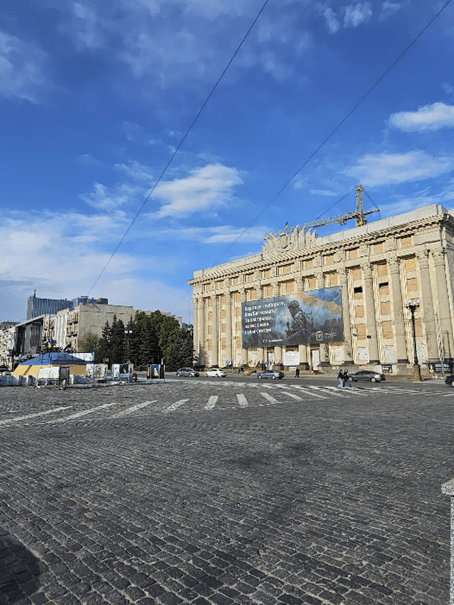
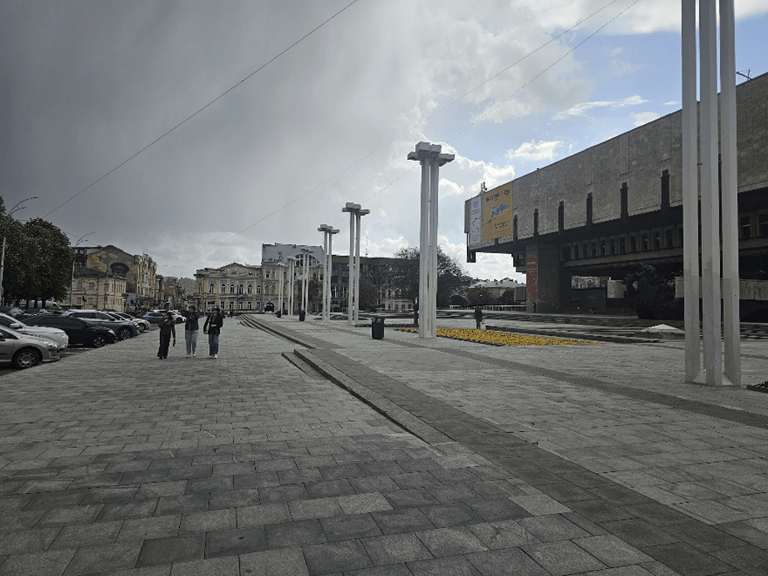
    Among the sights he takes me to is Freedom Square, which he proudly proclaims as the largest in Europe. Wikipedia says it’s actually in 8th, but it’s still quite impressive.

    I take some time to refresh before going out again. A dinner at a Georgian restaurant and more than a few drinks later, I find myself right at the edge of the 11pm curfew. At this time, streetlights are put out to challenge target identification in the city (which of course has minimal impact on infrared-guided systems). The transformation of bustling streets to complete silence and darkness fills the air with an eerie sadness. Still, the stars stay visible on a clear night above Ukraine’s second-largest city, and a great orange moon rises as I make my way to my lodgings.