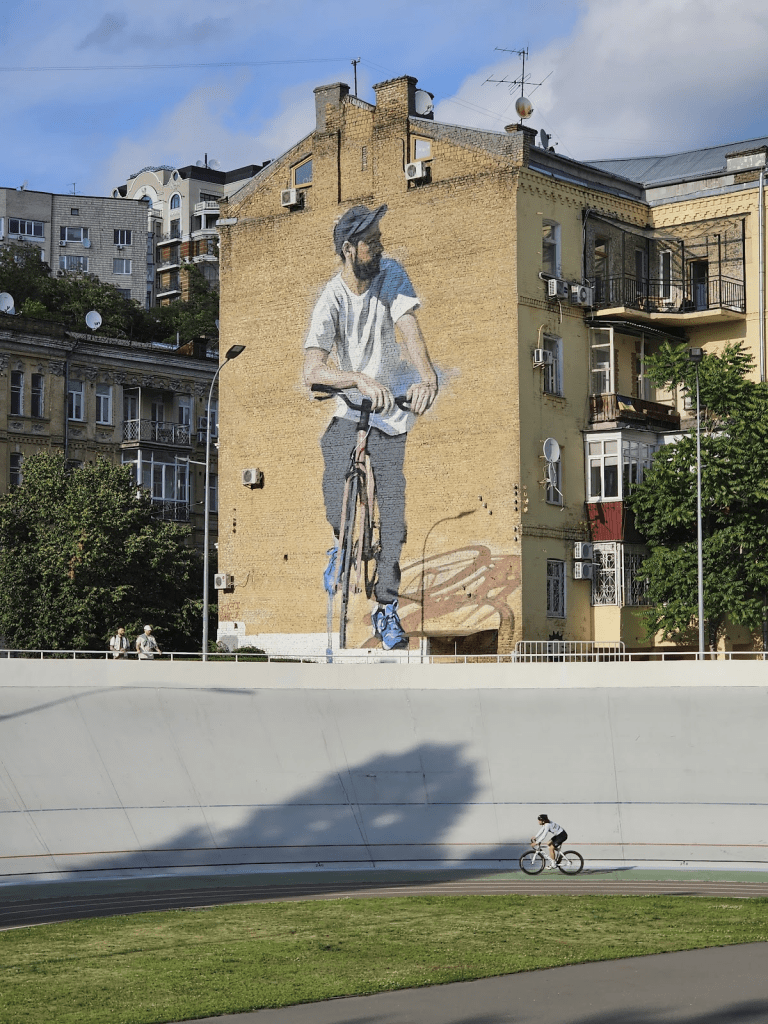
It was an adjustment to come to Kyiv after a first impression of Ukraine in Kharkiv. So distant did the city feel from everything I had seen in the east; every step west from the Ukrainian frontline adds a layer of insulation. I hardly knew what to write as well – so much of the city operates just as New York does: girls flog ribbons on Khreshchatyk – the main drag – just like the phony Buddhists would foist their medals on tourists in Times Square; cars are appropriately upscaled to reflect the wealth of the capitol; a recent rhinoplasty patient walks out of luxury department store; delivery mopeds test their fates against the laws of traffic and the concept of the right of way. Even the Jehovah’s Witness reps are here.
Kyiv, settled millennia ago but officially founded in 482 CE, gained regional prominence as a Viking trading port on the Dnieper in the 9th century. The urban plan of the walled city at the top of an eminently defensible (less so walkable) hill dates to the 11th century, when Kyiv was the center of one of the largest and most powerful European empires under Yaroslav the Wise. A favorite scrawl in a bar next to the reconstructed fortress gate displays his royal lineage traced all the way to England’s Elizabeth II (Charles doesn’t get a shout at time of writing).
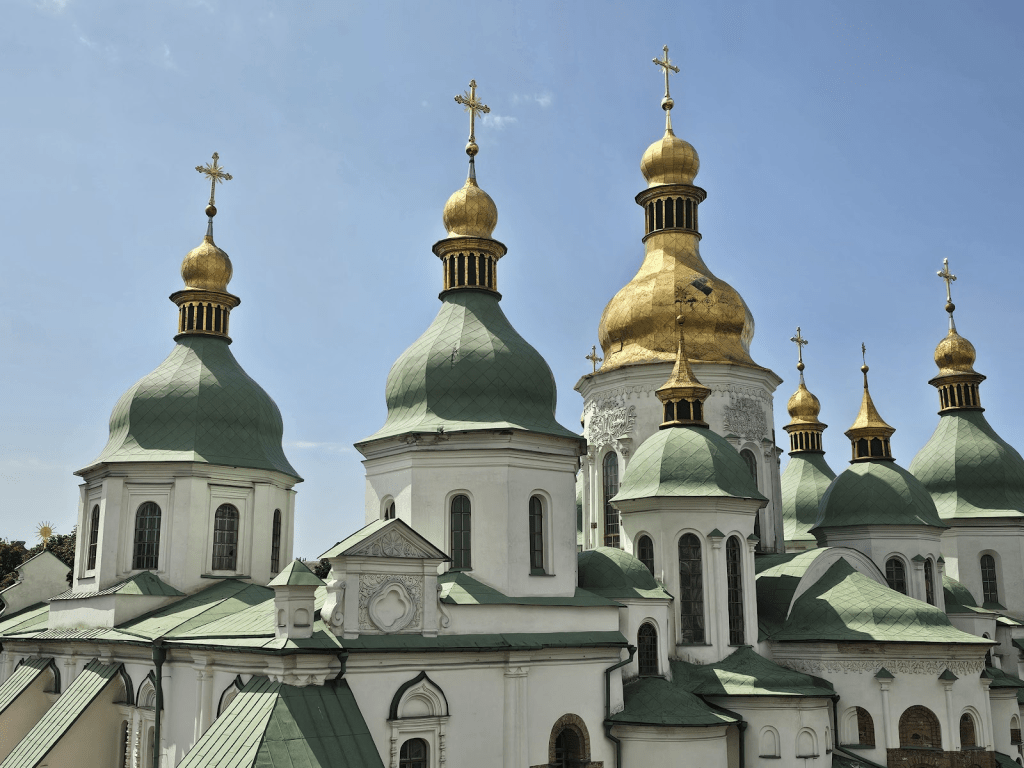
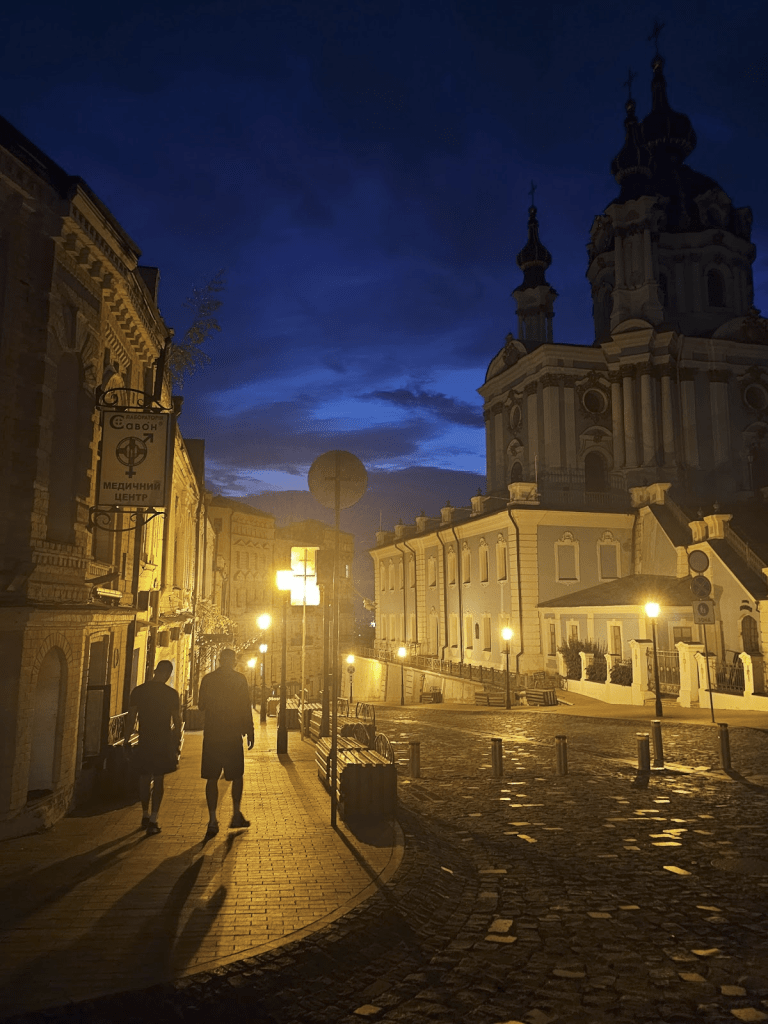
In the Old Town, the white walls and golden turrets of the churches sparkle in the sunshine; the immaculate parks featuring centuries-old trees are filled with the sounds of birds chirping – never drowned out by passing trucks or some asshole with a bluetooth speaker. A neighborhood in the shadow of St. Sophia’s Cathedral – one of the most beautiful that I have seen anywhere in the world – mostly features 19th and early 20th century Ukrainian Baroque architecture that reminds me in no small sense of Brooklyn Heights.
The food is excellent. The coffee is stellar. There is a conscientiousness pervasive in every interaction; a consistent sense of polity and rarely-raised voices. I never have to watch my back in Kyiv, so outrageous is the idea of any aggression expressed in the conduct of one’s day-to-day.
The people here are stunningly, absurdly beautiful – active, athletic, and fed with the standards of produce that only the breadbasket of Europe can provide. I was notified ahead of my arrival that I shouldn’t worry about what to wear; Americans are always the worst-dressed (a pattern I upheld). The drama and dynamism of the stories surrounding this city – from the revenge of Queen Olha for the murder of her husband, to the exiled King of Norway Harald Hardrada courting the Princess Elisiv – reflect the romantic nature of Kyiv, one of the truly legendary cities in world history. Flower shops are everywhere, and planters and chestnut trees line pristine streets.
There is the curfew, the missile and drone strikes, the military presence, the fortifications around buildings and monuments, the damaged buildings and structures. In the mornings, when the air is filled with smoke, the sadness and exhaustion after trying to sleep in crowded train stations while explosions rock the city is evident in everyone’s faces. Kyivans’ collective endurance is wrenching, all the more so for the attacks’ failure to shake the unflappable kindness a visitor can expect here.
In the afternoon, when the smoke has dissipated, the streets are crowded and bars and coffee shops fill to capacity. There’s a war on and people need to live.


 Letters from the Republic
Leave a comment